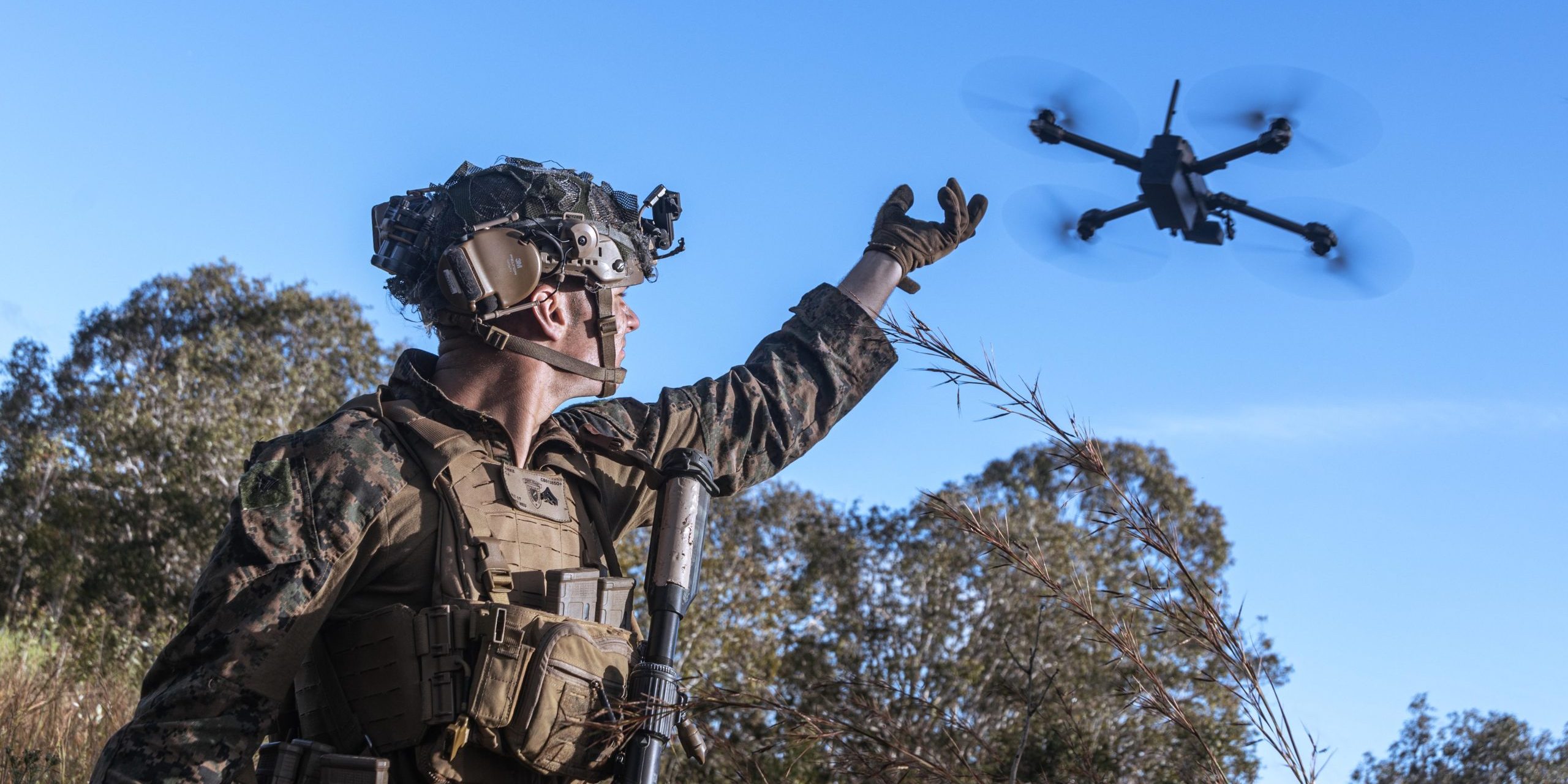
WASHINGTON — Seeing the success and lethality of drones in the Ukraine war, the Department of Defense is aiming to kickstart U.S. industry to make some 300,000 drones quickly and inexpensively over the next two years.
The department has requested information to gauge industry’s willingness and ability to meet the challenge with an initial focus on small attack drones.
The request spells out a plan that will begin early next year, when the department will, over the course of two years, and within four phases, offer $1 billion to industry to build a large number of small unmanned aerial systems capable of conducting one-way attack missions.
The first of those four phases, called “gauntlets,” runs from February to July 2026. During that time, 12 vendors will be asked to collectively produce 30,000 drones at a cost of $5,000 per unit, for a total of $150 million in department outlays.
Over the course of the next three gauntlets, the number of vendors will be reduced from 12 to five, the number of drones ordered will increase from 30,000 to 150,000, and the price per drone will drop from $5,000 to $2,300.
“Drone dominance will do two things: drive costs down and capabilities up,” Defense Secretary Pete Hegseth said. “We will deliver tens of thousands of small drones to our force in 2026, and hundreds of thousands of them by 2027.”
Through the drone dominance program, $1 billion has been budgeted to fund the manufacture of approximately 340,000 small UASs for combat units over the course of two years.
After that, it’s expected that American industry’s interest in building drones as a result of the program will have strengthened supply chains and manufacturing capacity to the point that the military will be able to afford to buy the drones it wants, in the quantity it wants, at a price it wants, through regular budgeting.
Equipment is only part of the game, Hegseth said. Doctrine — how the warfighter fights — is also critical.
“I will soon be meeting with the military services to discuss transformational changes in warfighting doctrine,” he said. “We need to outfit our combat units with unmanned systems at scale. We cannot wait. The funding … is ready to be used to mount an effective sprint to build combat power. At the Department of War, we are adopting new technologies with a ‘fight tonight’ philosophy — so that our warfighters have the cutting-edge tools they need to prevail.”
Following the end of the Cold War, Hegseth said U.S. defense spending dropped precipitously, and as a result, there was also a consolidation of defense contractors from hundreds to just dozens. The department, he said, budgeted for quality rather than quantity — and for 30 years got what it needed.
“However, we now find ourselves in a new era,” he said. “An era of cheap, disposable battlefield drones. We cannot be left behind — we must invest in inexpensive, unmanned platforms that have proved so effective.”