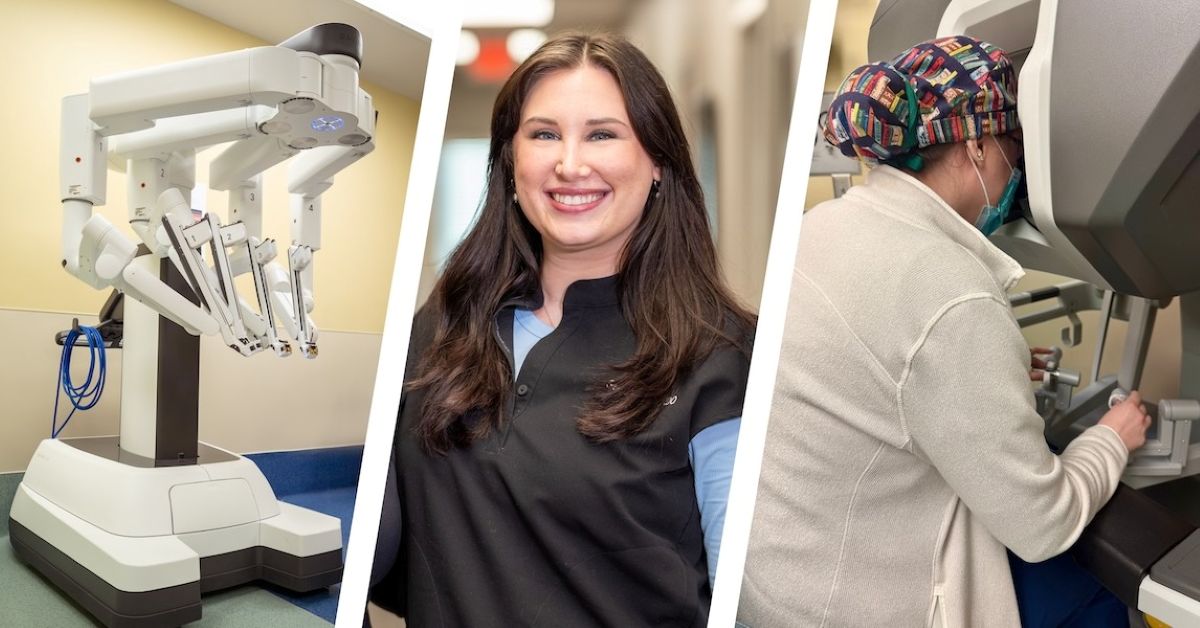
Women in Marshall County and Northeast Alabama now have expanded access to minimally invasive surgical care as Marshall Medical Centers adds robotic-assisted procedures to its gynecological department.
According to Marshall Medical Centers, the expansion follows the arrival of Dr. Holly Kiper, who joined the hospital’s OB/GYN team and brings extensive experience performing robotic procedures.
“It’s been awesome for patients,” Kiper said. “Patients are leaving the same day after hysterectomies. There’s a lot less pain, less time under anesthesia. You can do bigger and more complicated cases robotically while still using smaller incisions. That’s good for the patient and for the healing process.”
Marshall Medical Centers uses the da Vinci Surgical System, an FDA‑approved robotic platform that provides surgeons with high‑definition 3D visualization and specialized instruments. The system is controlled by the surgeon from a console in the operating room and allows procedures to be performed through small incisions.
Robotic-assisted surgery was already available at Marshall Medical Centers for several specialties, including urology, colorectal surgery and general surgery. Hospital officials say the addition of advanced gynecological procedures expands options for women who may benefit from minimally invasive surgical care.
Common gynecological procedures now performed robotically include hysterectomy, myomectomy to remove uterine fibroids, endometriosis resection, ovarian cyst removal and sacrocolpopexy to repair pelvic organ prolapse. Robotic techniques may also be used in procedures related to cervical, ovarian and uterine cancers.
Robotic surgery allows physicians to perform complex procedures through incisions typically measuring between 5 and 12 millimeters. According to Marshall Medical Centers, the system filters out hand tremors and enables highly precise movements, giving surgeons greater accuracy and control during procedures.
“These computer-controlled devices are programmed to aid in the positioning and manipulation of surgical instruments,” Marshall Medical Centers said in information about the program. “This technique gives surgeons greater surgical site visualization along with better accuracy, flexibility and control.”
Hospital officials say robotic-assisted surgery can provide patients with less blood loss, shorter hospital stays, reduced pain and faster recovery times compared with traditional open surgery.
“It is an excellent tool for patients who otherwise would need a bigger surgery with more hospital time and down time,” Kiper said. “People get to recover in their own beds.”
Marshall Medical Centers currently performs robotic procedures at Marshall South and hopes to expand the program further as surgical demand grows.
Sherri Blevins is a reporter for 256 Today.