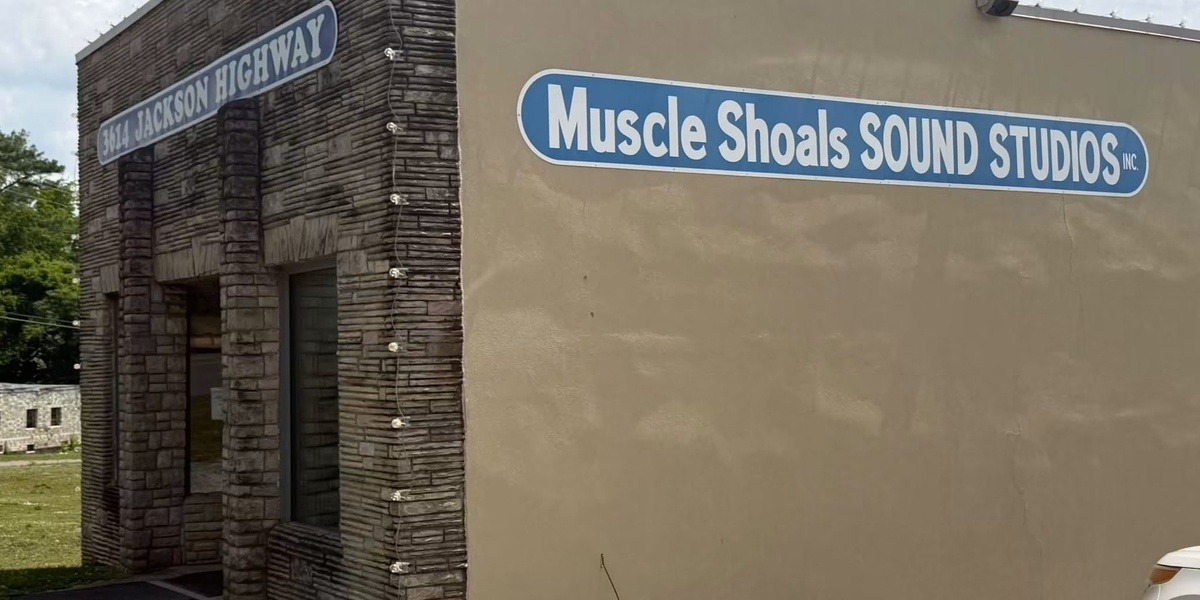
The nonprofit that owns Muscle Shoals Sound Studio is facing a third lawsuit from the state of Alabama over workers’ compensation coverage, with officials asking a judge to penalize the organization and stop it from operating.
The Alabama Department of Workforce alleges the Muscle Shoals Music Foundation has not provided proof of the workers’ compensation coverage required by law. The latest complaint was filed in Colbert County in September, according to WAFF 48.
The state’s first lawsuit against the foundation dates to 2022.
Along with seeking penalties, the state is asking the court to prevent the foundation from continuing to operate. The request does not mean the studio has been ordered to close.
Alabama generally requires employers with five or more employees to carry workers’ compensation coverage. The insurance helps cover medical expenses and other benefits for employees injured on the job.
The foundation owns and operates Muscle Shoals Sound Studio at 3614 N. Jackson Highway in Sheffield. The studio opened in 1969, when four musicians known as the Swampers left FAME Recording Studios to establish their own recording space.
The studio went on to host recording sessions for some of the biggest names in music, including the Rolling Stones, Bob Dylan, Cher, Aretha Franklin and Bob Seger. Songs recorded there helped establish the Shoals as a destination for artists seeking the region’s distinctive sound.
During its original run, the Swampers played on more than 200 albums, contributing to a catalog that included more than 75 gold and platinum records. The Rolling Stones also recorded three songs at the studio during a three-night visit in 1971: “Brown Sugar,” “Wild Horses” and “You Got to Move.”
The building changed hands after the original studio moved to a larger location in 1978. The Muscle Shoals Music Foundation purchased the Jackson Highway property in 2013 and led efforts to restore it. The studio reopened for tours in January 2017.
Today, the nonprofit operates the historic site as a recording studio and visitor attraction. Its work also includes preserving the region’s musical history and supporting music education.
The latest lawsuit puts the foundation’s compliance with state workers’ compensation requirements at the center of the dispute. The court will have to address the state’s claims and its request to restrict the organization’s operations.
Zachary Austin is a writer for 256 Today. You can contact him at [email protected].
Got a tip for OTR? Send your tip to [email protected] with related photo/video, your name, phone number, and e-mail address.