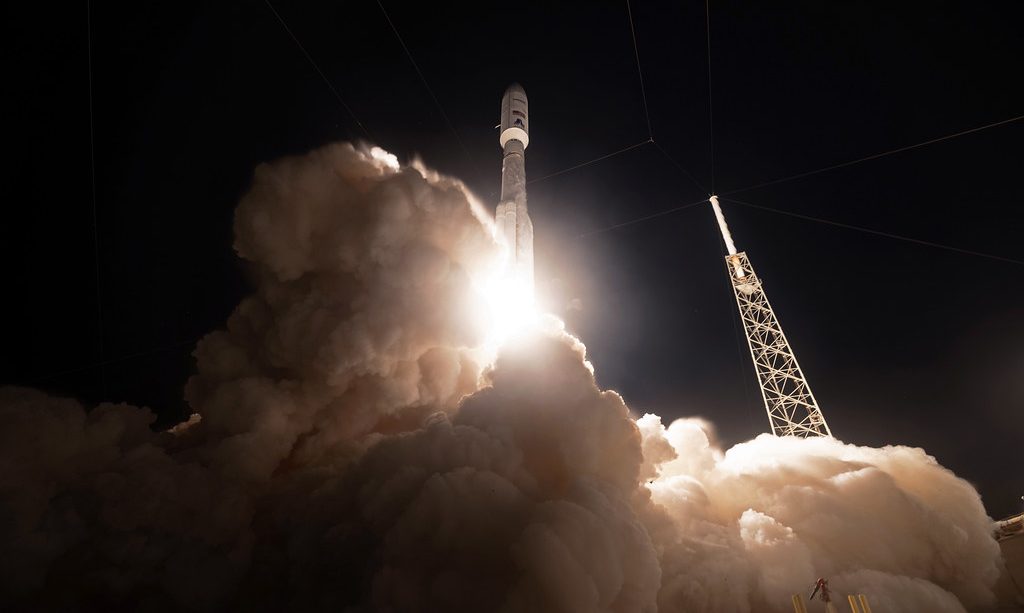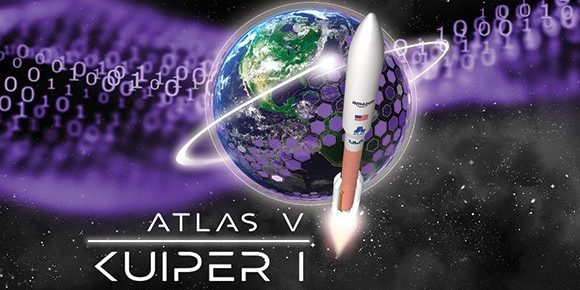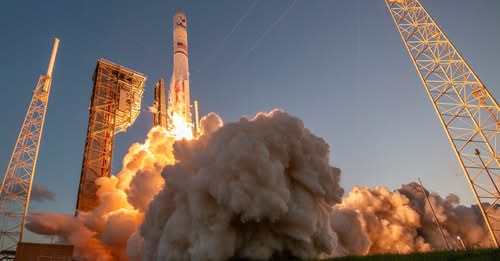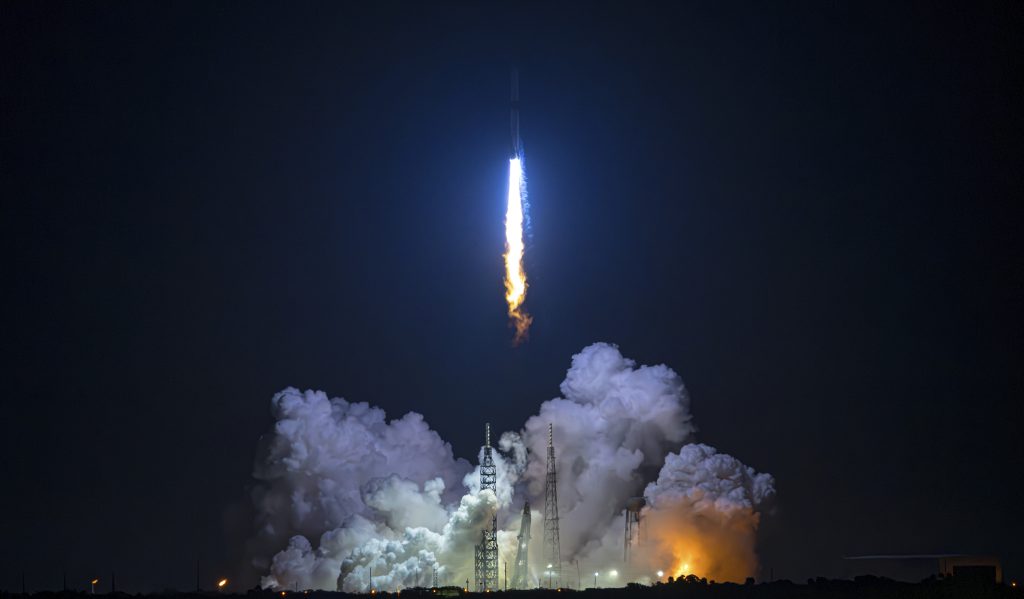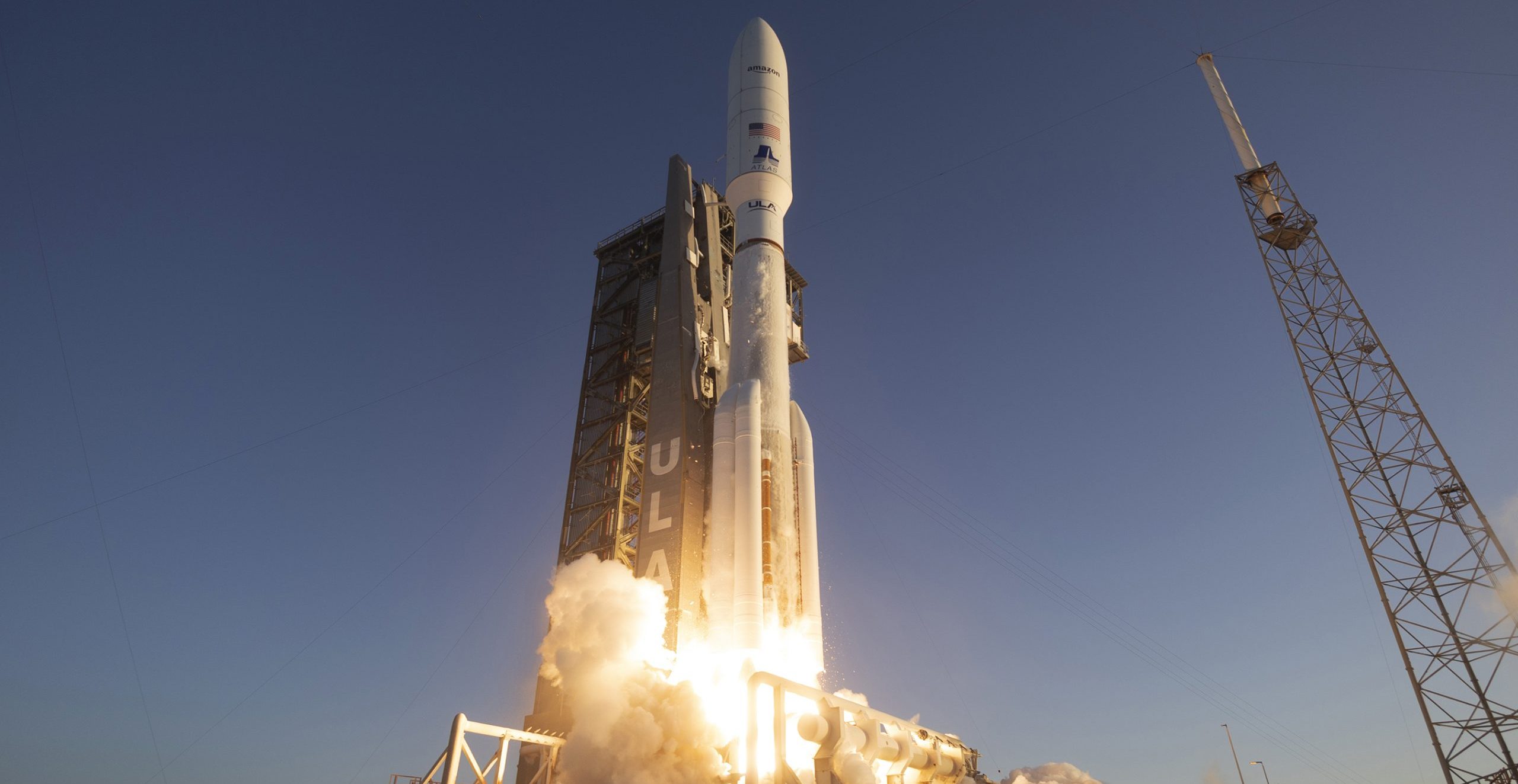
CAPE CANAVERAL, Fla. – Delivering more than a smile, a Decatur-built Atlas V launched this morning with a second batch of operational broadband satellites for Amazon’s Project Kuiper constellation.
The United Launch Alliance Atlas V rocket lifted off just before 7 a.m. (EDT) today from Space Launch Complex-41 at Cape Canaveral Space Force Station.
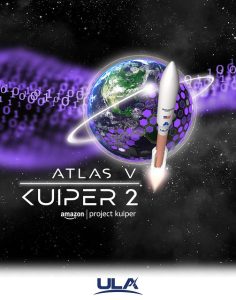 “This mission marks the next step in Amazon’s initiative to provide fast, reliable internet to customers around the world, including those in unserved and underserved communities,” ULA said in a news release.
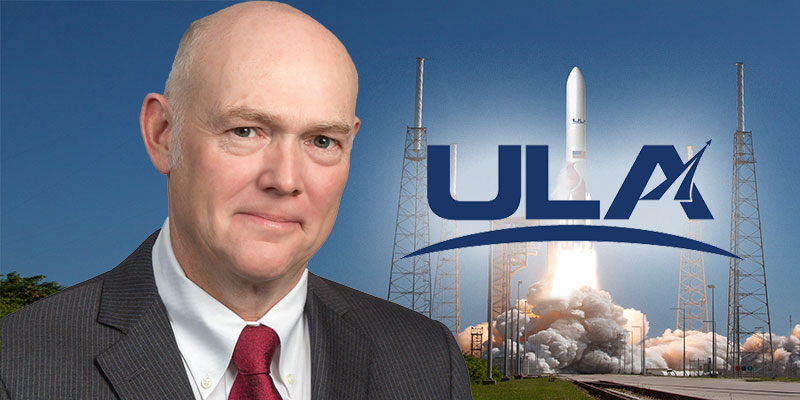
“We are proud to continue our strong partnership with Amazon and empower their mission to bridge the digital divide through reliable satellite technology,” said Gary Wentz, ULA vice president of Government and Commercial Programs. “ULA, working as a catalyst to global connectivity in collaboration with Amazon, enables delivery of these critical satellites designed to drive innovation and connect the world.”
The Kuiper 2 launch deployed the second batch of operational Project Kuiper satellites into the intended orbit, the release said. There are six remaining Kuiper missions on the Atlas V rocket, building up to 38 high-cadence, rapid fire launches on the next-generation Vulcan rocket.
ULA, which has a rocket plant in Decatur, will deliver more than half of the Project Kuiper constellation’s 3,200 satellites, through the world’s largest commercial launch agreement.
ULA’s next launch is the first Vulcan mission for the U.S. Space Force.