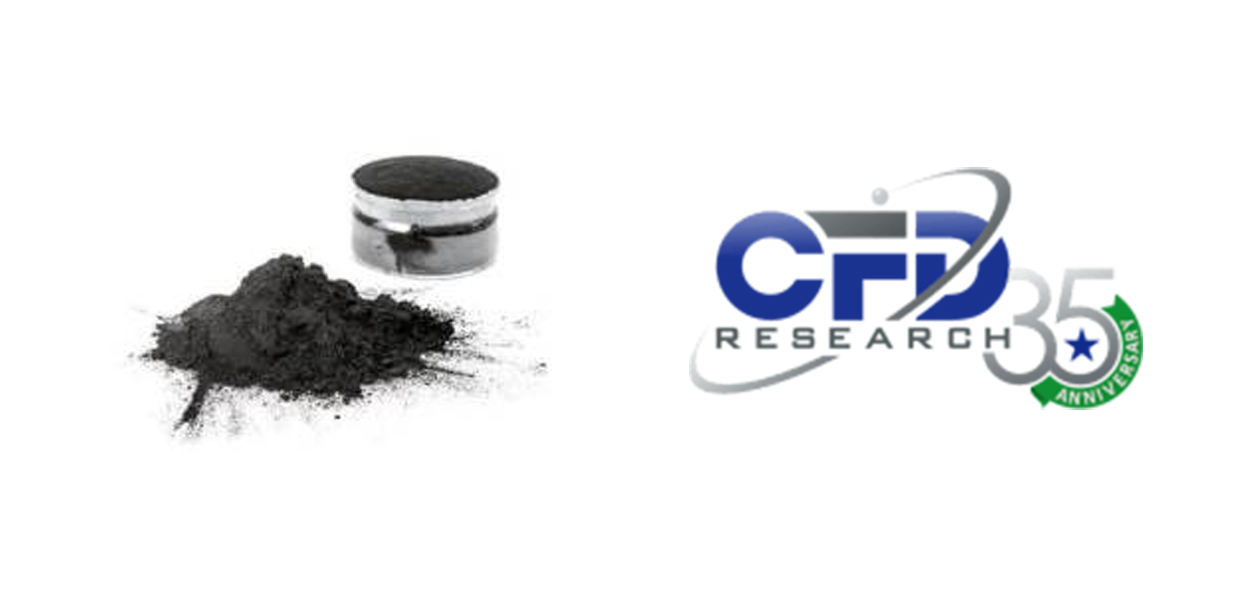
HUNTSVILLE — CFD Research, one of Huntsville’s most prolific innovative solutions providers, has been awarded a $1.5 million contract from the Missile Defense Agency to develop non-toxic supercapacitors based on plant-derived carbon materials.
“Metal oxides are commonly incorporated into supercapacitor electrodes to improve energy density and performance, and the organic electrolytes commonly use acetonitrile, which is toxic,” said Dr. Vernon Cole, CFD Research technical fellow and principal investigator for the MDA project. “The presence of metal oxides and toxic solvents complicates end of life device disposal.”
Because of that, the MDA has been seeking non-toxic alternatives to the electrode materials and electrolytes used in high-voltage supercapacitors. The alternatives would simplify and reduce the disposal cost.
For missile defense system electronics applications requiring high-duty cycle and high-pulse power output, the supercapacitors provide high-power densities, ultrafast recharge, and long cycle lives.
The CFD Research team will scale up the production of non-toxic, plant-derived carbon electrodes and develop a suitable non-toxic organic electrolyte formulation for demonstration in a high voltage supercapacitor.
“The non-toxic, prototype supercapacitor will be designed to deliver energy and power density comparable to or better than existing commercial devices containing toxic constituents,” said Matt Bender, CFD Research vice president of Energy and Materials division.