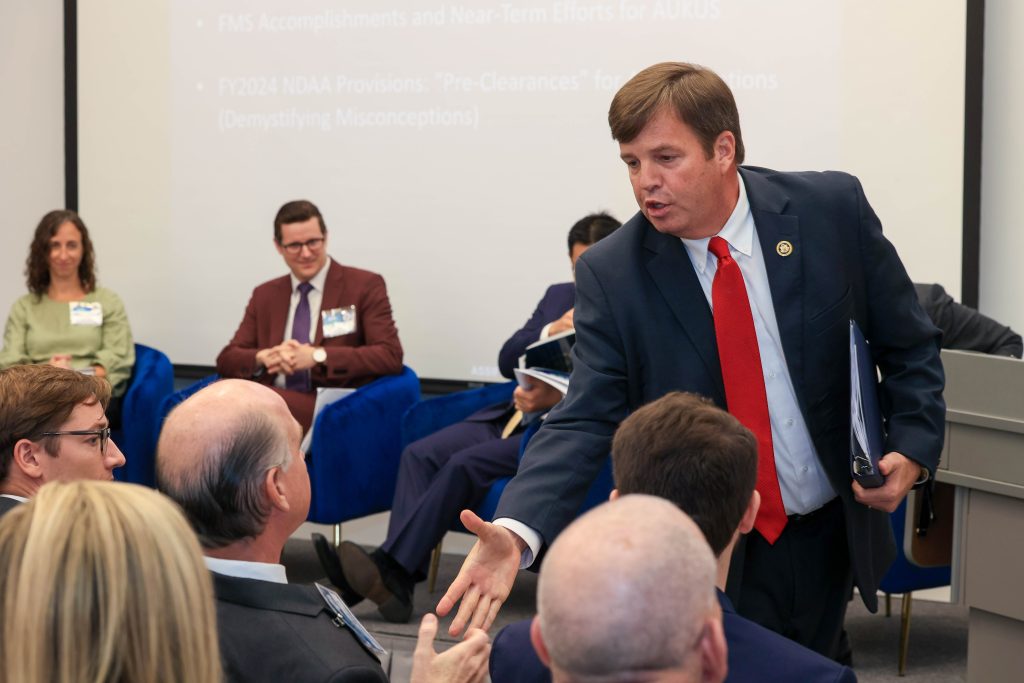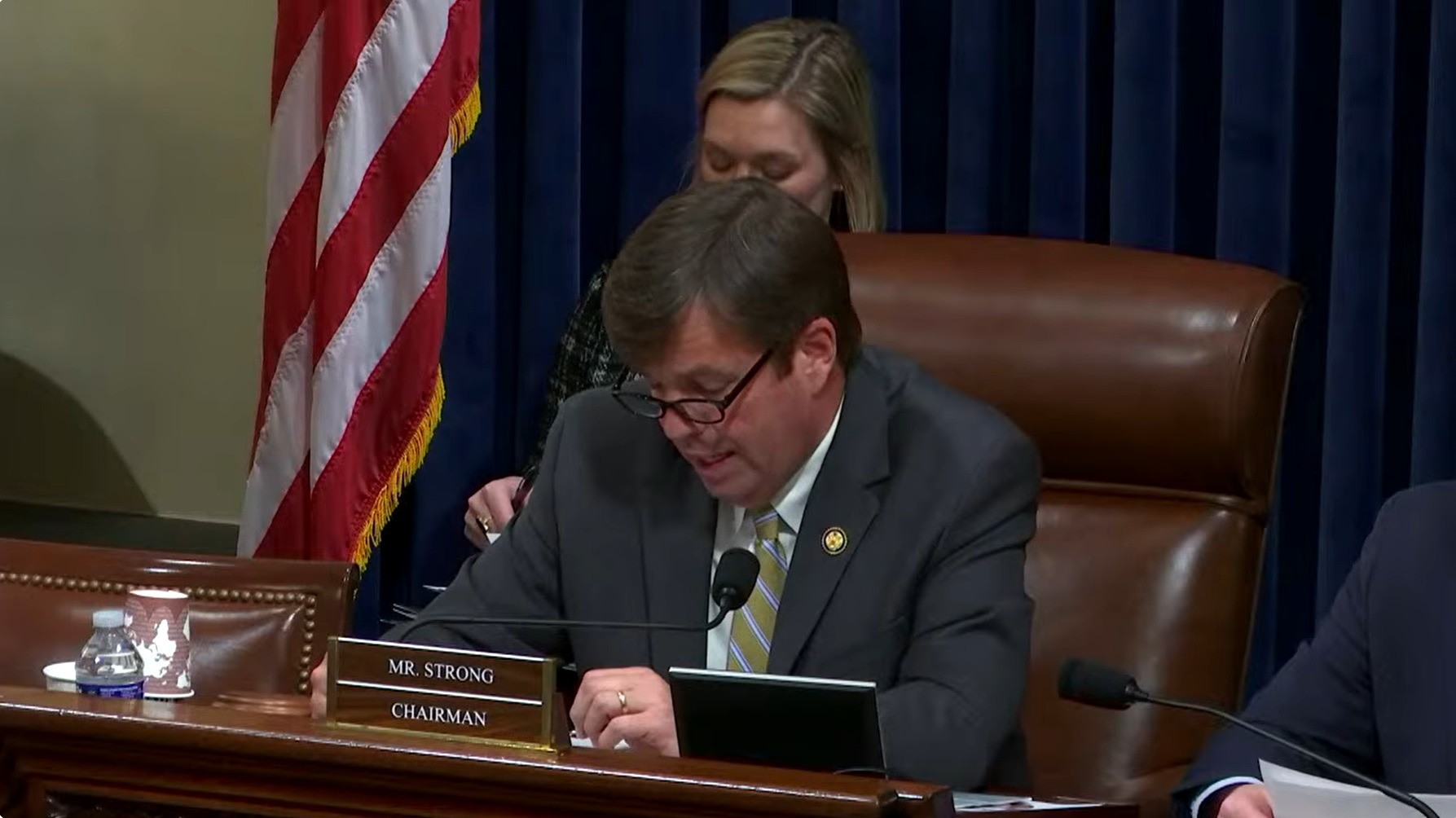
U.S. Rep. Dale Strong (R-Huntsville) chaired a Homeland Security subcommittee hearing examining federal preparedness against agroterrorism threats targeting the nation’s food and agriculture systems.
Strong, who serves as Chairman of the Homeland Security Subcommittee on Emergency Management and Technology, convened the hearing to assess vulnerabilities and review ongoing efforts by federal agencies to strengthen protections for America’s agricultural infrastructure.
Witnesses from the Department of Homeland Security and the U.S. Department of Agriculture outlined steps to enhance border screening for invasive species and pathogens, improve coordination between federal agencies, expand training for state and local stakeholders, and implement the Trump Administration’s National Farm Security Action Plan.
“Our adversaries could cripple the heart of our homeland without ever firing a single shot by targeting agriculture with chemical and biological agents and carrying out cyberattacks on the technology that farms depend on.”
“I applaud President Donald Trump and his administration for issuing the National Farm Security Action Plan to enhance our nation’s preparedness. This effort reflects the reality of the agroterrorism threat – it is real, evolving, and demands action across the federal government,” said Strong.
The hearing also addressed concerns about foreign ownership of U.S. farmland located near critical infrastructure and sensitive military installations. Strong referenced a 2024 Government Accountability Office report that identified gaps in federal reporting requirements for foreign farmland purchases near military bases.
Strong has introduced H.R.1438, the “Protecting America’s Agricultural Land from Foreign Harm Act,” which would prohibit the purchase or lease of U.S. agricultural land by individuals associated with the governments of China and other foreign adversaries.
The hearing builds on a September 2025 session that included academic and subject-matter experts, including leaders from Alabama A&M University and Auburn University, who examined how hostile actors could exploit vulnerabilities in America’s food and agricultural systems and disrupt the nation’s supply chain.
The concerns discussed during the hearing align with the Trump Administration’s National Farm Security Action Plan, a government-wide strategy aimed at strengthening agricultural biosecurity, improving information sharing across agencies, enhancing border screening for invasive species and pathogens, and increasing oversight of foreign ownership of farmland near critical infrastructure and military sites.
Law enforcement activity has heightened concerns in recent days. Authorities in Las Vegas recently recovered biological materials from an illegal laboratory and transferred them to the National Bioforensic Analysis Center for testing.
Officials said the incident, along with ongoing attempts by foreign actors to introduce harmful biological materials into the United States, underscores the importance of strong detection, coordination, and rapid response capabilities.