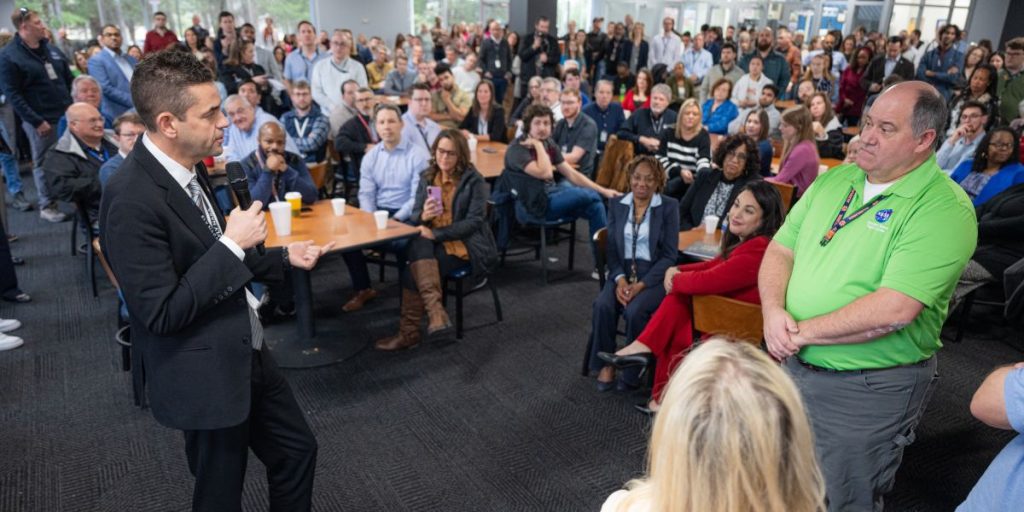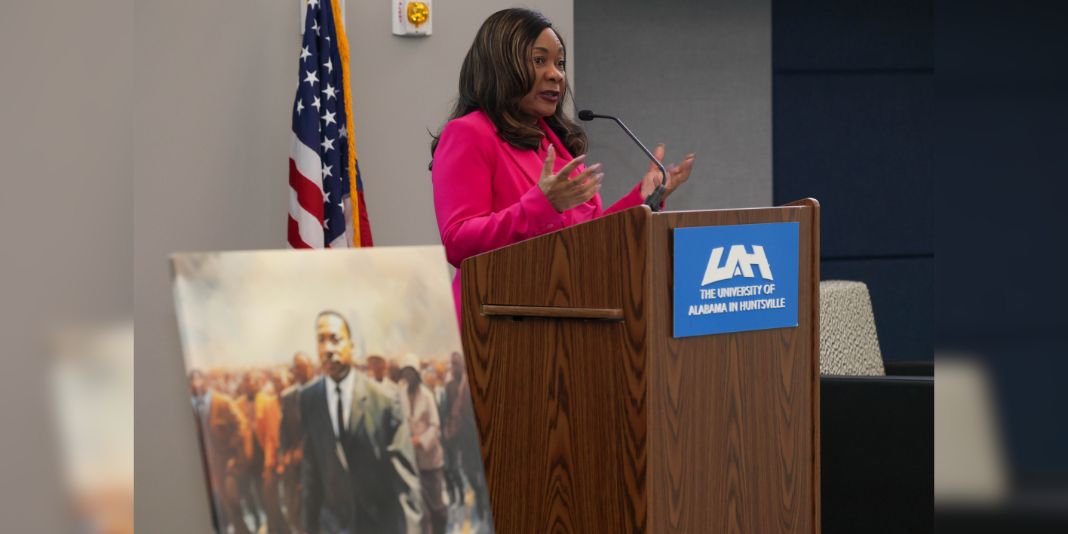
The University of Alabama in Huntsville marked Martin Luther King Jr. Day by spotlighting service, leadership and health equity during its second annual MLK Leadership Breakfast, an event that centered on improving access to health care for underserved communities.
The January 14 breakfast featured keynote speaker Catherine Coleman Flowers, founder of the Center for Rural Enterprise and Environmental Justice and a nationally recognized advocate for clean water and sanitation as a basic human right.
Flowers is known for her work bringing global attention to failing sewage systems and related health issues in Lowndes County, one of Alabama’s poorest rural areas.
Flowers told attendees that while technological innovation has made it possible for NASA to recycle urine into drinking water for astronauts, communities like Lowndes County still lack reliable wastewater solutions.
“NASA knows how to take urine and turn it into drinking water,” Flowers said. “But they do not know what to do with the solids. We are hoping to partner with NASA to come up with innovative ways to treat wastewater. The solutions they find could potentially help places like Lowndes County.”
The breakfast, held in the Student Services Building, carried the theme “Shaping the Healthcare Community of the Future” and highlighted work being done by the UAH College of Nursing, including its new Neighborhood Nursing initiative. The program also included a panel discussion with Flowers and Dr. Leon Lewis of Huntsville Hospital Health System, moderated by WHNT-19 anchor Tamika Alexander.
UAH Vice President for Strategic Communications Kristina Hendrix welcomed guests and tied the event to Dr. King’s legacy of service and leadership, sharing quotes that emphasized consensus-building and community involvement.
“This morning you will hear from leaders who have made it their mission to serve and to mold the communities they lead, just as Dr. King did,” Hendrix said.
Dr. Karen Frith, dean of the UAH College of Nursing, said the university’s Neighborhood Nursing initiative reflects those same values. The pilot program will send students, faculty, alumni and community partners into neighborhoods to provide free preventive health screenings and education, while connecting residents to primary and specialty care.
“It is a powerful learning experience for our students because it brings the social determinants of health into clear focus,” Frith said. “Health is not shaped by physical condition alone. It is influenced by the environments in which people live, work, play, and pray.”
Flowers, a MacArthur Fellow and author of “Waste: One Woman’s Fight Against America’s Dirty Secret,” said collaboration between communities, health professionals and educational institutions was critical to exposing the public health crisis caused by raw sewage in Lowndes County.
“When we just talked about sanitation as an infrastructure issue, nobody cared,” Flowers said. “But when we connected it to health care disparities, people started paying attention. That changed everything.”
During the panel discussion, Lewis pointed to a growing shortage of doctors and health care providers as one of Alabama’s most pressing challenges, particularly as population growth continues in Huntsville and surrounding areas.
Flowers said expanding access to education is key to addressing both poverty and long term health care needs.
“Just because a person grows up being poor does not mean they have to end up being poor,” she said. “When we start limiting education for young people, then we are going to have more poverty.”
Organizers said the annual event is designed to honor Dr. King’s legacy by encouraging service, collaboration and action to improve quality of life for communities across Alabama.