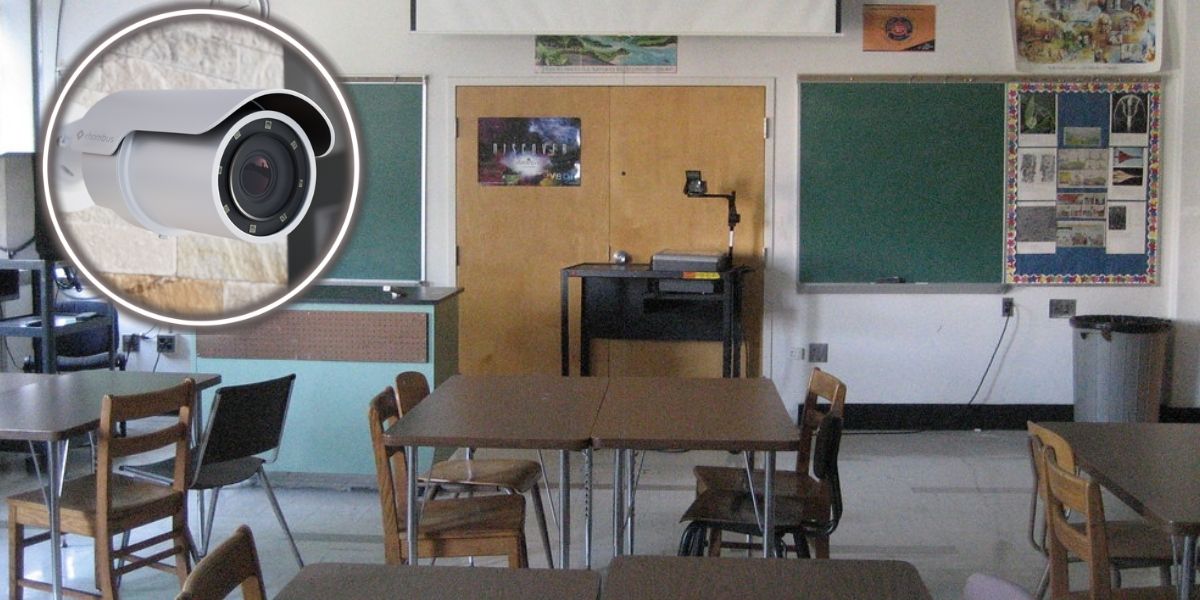
The Huntsville City Schools Board of Education has voted unanimously to approve a new policy allowing cameras in self-contained resource classrooms, moving the district forward with implementation of Alabama’s Tyler’s Law.
The policy authorizes video and audio recording in designated special education classrooms and related spaces, with strict limits on how footage may be accessed and used. District officials told board members the rules are designed to closely mirror the requirements and intent of Tyler’s Law, the state statute governing classroom cameras in self-contained special education settings.
Resource classrooms are defined as K–12 classrooms where at least half of regularly attending students receive special education services. The designation also includes attached service rooms, sensory rooms, and calm-down areas.
District staff said camera installation is already underway. About 40% of identified classrooms — roughly 22 of 76 — have had cameras installed so far, though none were yet operational at the time of the board workshop presentation.
Under the policy, cameras will record both video and audio during school hours and any time a student is present in a covered classroom. Cameras must cover instructional areas and attached rooms but are prohibited from monitoring restrooms, showers, or changing areas, except where a small portion may be captured incidentally due to room layout.
School officials emphasized that recordings will not be livestreamed or continuously monitored and cannot be used for routine teacher evaluations. Footage may only be reviewed when a reported incident — such as alleged abuse, neglect, harassment, or other inappropriate behavior — is brought to a principal or the superintendent.
When an incident is reported, access to relevant footage is limited to specific parties, including involved staff, parents or guardians of involved students, designated investigators, and appropriate law enforcement or legal representatives, consistent with student privacy laws. The district must also take steps to protect the identity of students not involved in an incident, such as blurring faces in reviewed video.
Recordings must be retained for at least three months under state law. If an investigation or legal proceeding is underway, footage must be preserved until that process and any appeals are complete, after which recordings are to be deleted.
The policy also requires the district to provide written notice at least annually to families of students assigned to classrooms where cameras operate. Schools may also post signage at classroom entrances alerting visitors and staff that audio and video recording is in use.
During board discussion, administrators said camera systems will be tied into the district’s existing monitoring infrastructure, with technology staff able to detect outages and repair malfunctioning units.
With the board’s unanimous approval, district leaders said procedures governing installation, notification, and footage requests will be finalized as implementation continues.
Sherri Blevins is a reporter for 256 Today.