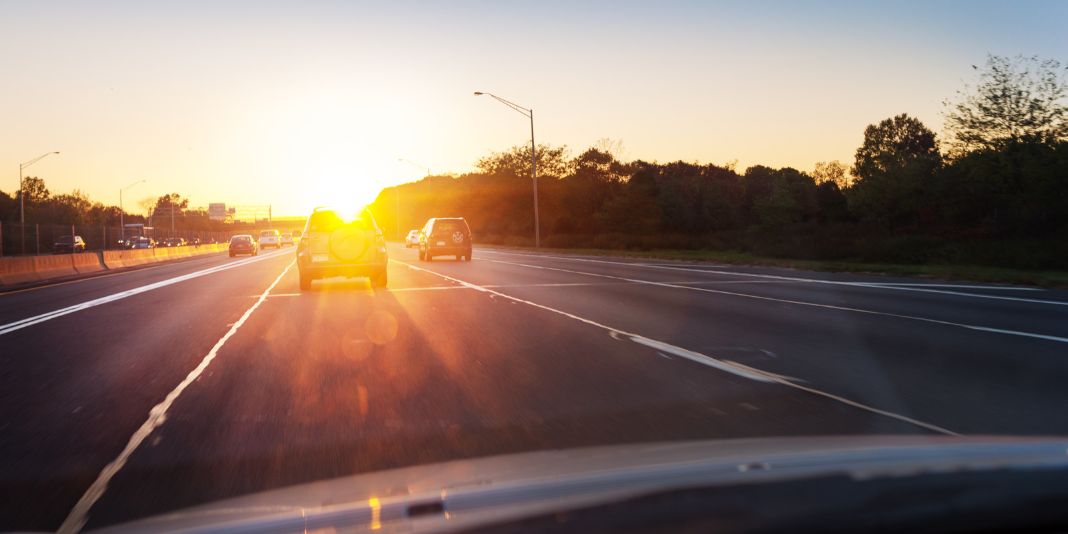
If you’ve ever driven westbound on Interstate 565 during the evening commute, you know the frustration of having the setting sun directly in your eyes.
Now, a new analysis by a Texas personal injury law firm ranks Alabama among the nation’s deadliest states for sun glare-related crashes, suggesting the seasonal nuisance carries serious risks.
According to BadCrash.com, Alabama ranks ninth nationally for the rate of traffic deaths involving sun glare, with 11 fatalities reported during 2023 and 2024.
That’s an annual rate of 1.07 deaths per million residents, nearly twice the national rate of 0.56.
The analysis examined federal crash data and found 382 sun glare-related traffic fatalities nationwide over the two-year period.
And here’s the part that will surprise absolutely no one who has battled the evening sun on I-565: Fall is particularly bad.
September, October and November accounted for 38.2% of the glare-related crashes identified in the analysis.
As the sun sits lower in the sky and daylight saving time ends, the evening commute can put drivers directly in its path.
The study found September was the deadliest month nationally, with 51 glare-related fatal crashes across the two years.
South Dakota topped the rankings with an annual rate of 2.7 deaths per million residents, nearly five times the national average. Montana, Utah, Missouri and Rhode Island rounded out the top five.
Alabama’s ninth-place ranking puts it ahead of most states when the deaths are measured against population.
The numbers don’t tell us how many of those Alabama crashes occurred on I-565, University Drive or any other familiar stretch of North Alabama roadway. But anyone who has driven west toward Madison or Decatur on a clear fall afternoon knows how quickly a beautiful sunset can become a driving hazard.
The problem isn’t limited to rush hour, either. Early morning drivers heading east can face the same blinding conditions.
Research cited in the analysis from the Insurance Institute for Highway Safety found that glare-related crashes are most common when the sun is near the horizon.
And unlike rain or fog, a bright, sunny day doesn’t always register as dangerous driving weather.
A clean windshield, sunglasses, a lowered visor and extra following distance can help when the glare gets intense. Slowing down and avoiding sudden braking are also important when visibility drops.
So, the next time you’re crawling westbound on I-565 with the sun filling your windshield, there’s at least some comfort in knowing you’re not imagining things.
The evening commute really can be blinding.
And the numbers suggest it’s worth taking seriously.
Got a tip for OTR? Send your tip to [email protected] with related photo/video, your name, phone number, and e-mail address.