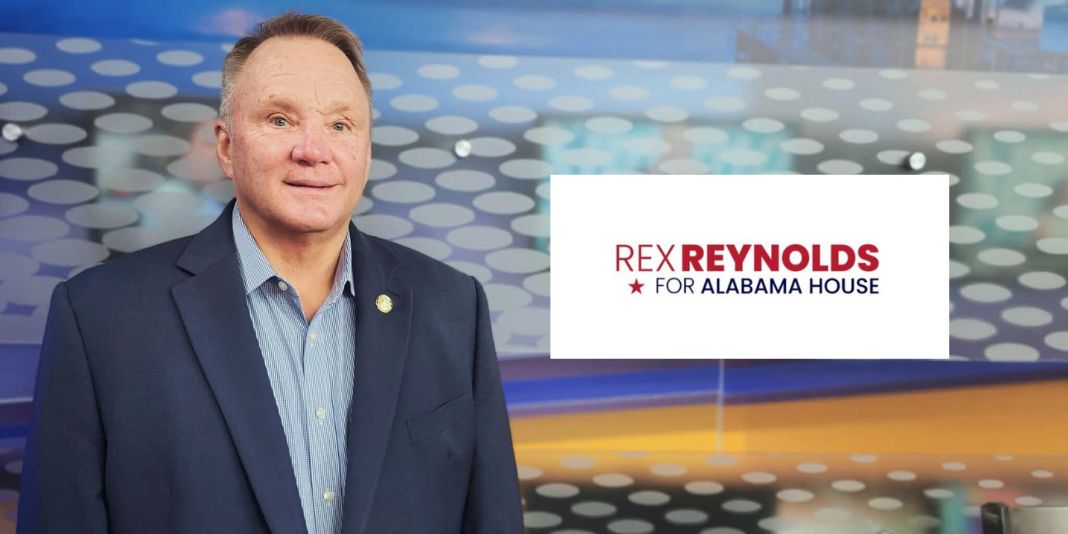
HUNTSVILLE — With the Alabama Legislature set to convene Jan. 16, State Rep. Rex Reynolds says the upcoming session will be fast-paced and focused, with lawmakers facing a compressed calendar that includes only one scheduled break.
As chairman of the General Fund budget, Reynolds (R-Huntsville) said preparation for the session has been underway for months.
Passing a conservative General Fund budget
Reynolds said his top priority this session is passing a conservative General Fund budget while preparing for tighter fiscal conditions ahead.
“As chairman of the General Fund, I have to pass a conservative budget and work with my colleagues to do that,” Reynolds said. “We have already been working in the offseason, and we will be ready.”
He noted the state finished the 2025 fiscal year 3.4% ahead of projections, totaling nearly $400 million. Of that amount, $192 million reverted back to agencies as rollover funding.
“That gives us some breathing room, but we need to hold on to that funding,” Reynolds said. “Things are going to get really tight as we move into the 2028 budget cycle.”
Reynolds said he approaches budgeting with a multi-year outlook, stressing the importance of planning well beyond the current fiscal year.
Opioid settlement funding and recovery efforts
Another major focus for Reynolds is continued oversight of opioid settlement dollars through the state’s Opioid Commission, now entering its fourth year.
“We have done $30-40 million the last couple of years, plus $10 million directly from the Legislature,” Reynolds said. “This year, we expect a $40 million appropriation.”
The funding supports prevention, treatment, and recovery services across Alabama, with Reynolds emphasizing the importance of maintaining momentum.
“We have some really good providers throughout the state,” he said. “We need to keep that good work going.”
Reynolds pointed to measurable results, including a 30% decrease in overdoses and a 40% reduction in opioid prescriptions over the past three years, along with the distribution of more than 300,000 Narcan kits statewide.
“When you hear stories about lives being saved because those kits were available, you know you’re making a difference,” he said.
Rural health transformation funding
Reynolds said progress is also being made on next steps for the Rural Health Transformation Program, which “empowers states to strengthen rural communities across America by improving healthcare access, quality, and outcomes by transforming the healthcare delivery system.”
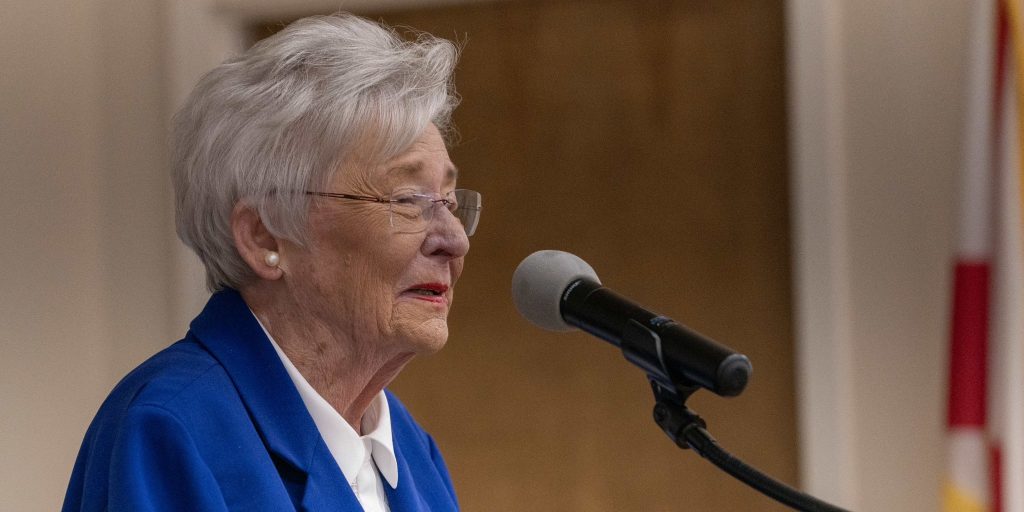
Gov. Kay Ivey appointed Reynolds to the advisory group which is overseeing the application process that was submitted to the federal government in early November. Reynolds said approval could come any day.
“Once it’s approved, we expect the first $100 million to be transmitted to Alabama,” he said. “That will be part of a $500 million investment over the next five years, with the potential for additional dollars beyond that.”
The funding is expected to address a wide range of needs, including workforce shortages, pharmacies, broadband access, telehealth, EMS transport, and other healthcare challenges.
“There are about 11 different categories that projects will have to fall within,” Reynolds said, adding that the newly appointed group will assist in supporting and approving grant applications.
Reelection and legislative record
Reynolds is running for reelection and said he is focused on continuing his work rather than the growing field of challengers.
“I’ve had two Democrats publicly say they’re running,” Reynolds said. “We’ll just stay focused on our campaign and keep doing the work.”
He cited his 35-year career with the City of Huntsville, primarily in law enforcement, as shaping his legislative priorities and approach.
“I was fortunate to work with the city of Huntsville for 35 years,” Reynolds said. “The majority of that time was in law enforcement. I spent my last eight years there working with Mayor (Tommy) Battle.
“I was able to take that experience and translate it to the state level.”
Reynolds said he is especially proud of his work expanding mental health crisis centers across Alabama, helping divert individuals from jails into treatment facilities.
“That’s what law enforcement, probate judges, and hospitals told us they needed,” he said. “We listened, and we acted.”
As the session approaches, Reynolds said his goal remains consistent: funding critical services while maintaining fiscal discipline and delivering results for his district and the state.