Huntsville-developed missile technology is moving closer to the battlefield under a new Army contract worth up to $1.21 billion.
Lockheed Martin was awarded a $1,211,234,988 contract for the Precision Strike Missile Increment 2 Early Operational Capability, the Army announced this week.
While work locations will be determined with individual orders, the award advances a version of PrSM that incorporates Huntsville-developed technology designed to track moving targets.
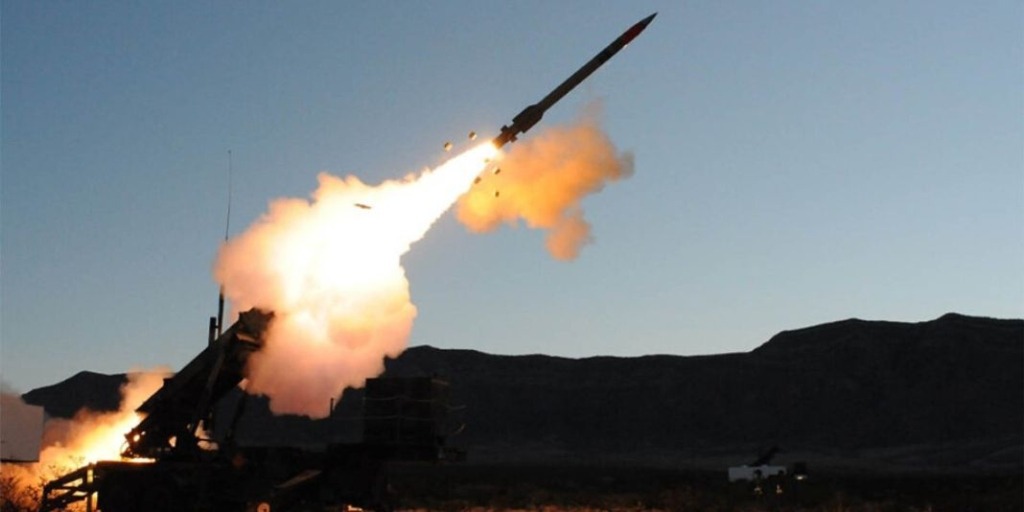
PrSM Increment 2 adds a multi-mode seeker designed to allow the missile to find and engage moving and time-sensitive targets on land and at sea. Lockheed Martin successfully completed the first flight test of Increment 2 in March, when the missile flew approximately 350 kilometers after launching from a HIMARS and demonstrated the new seeker technology against a moving maritime target.
The seeker technology behind Increment 2 has been part of Lockheed Martin’s Huntsville work for years. Technology developed through the company’s Strigo program in Huntsville helped inform the Increment 2 seeker as the Army worked to give PrSM the ability to engage moving targets.
The Army has not yet identified where work under the new award will be performed. The new contract is an indefinite-delivery/indefinite-quantity award, meaning the $1.21 billion represents its maximum potential value rather than money immediately obligated to Lockheed Martin. Work locations and funding will be determined as individual orders are issued.
The contract runs through Sept. 13, 2031.
PrSM is the Army’s next-generation surface-to-surface missile and is replacing the Army Tactical Missile System, or ATACMS. The baseline weapon is designed for long-range precision strikes, while Increment 2 expands the mission by adding the ability to pursue moving and maritime targets.
During the March flight test, Lockheed said the missile’s new guidance system successfully demonstrated the ability to acquire moving targets. At the time, Increment 2 remained in the technology-maturation phase and was undergoing its preliminary design review. Additional flight testing was planned for later in the year.
This week’s award specifically covers Early Operational Capability, marking another step from development and testing toward putting Increment 2 into operational use.
The contract comes amid a broader expansion of PrSM production. Lockheed Martin announced earlier this year that it and the Department of War had reached an agreement aimed at quadrupling PrSM production capacity. The company’s primary PrSM production operation is in Camden, Arkansas, where Lockheed said about 400 employees were working on the program as of March.
The Army solicited one bid for the Increment 2 Early Operational Capability contract and received one. Army Contracting Command at Redstone Arsenal is the contracting activity.
Got a tip for OTR? Send your tip to [email protected] with related photo/video, your name, phone number, and e-mail address.