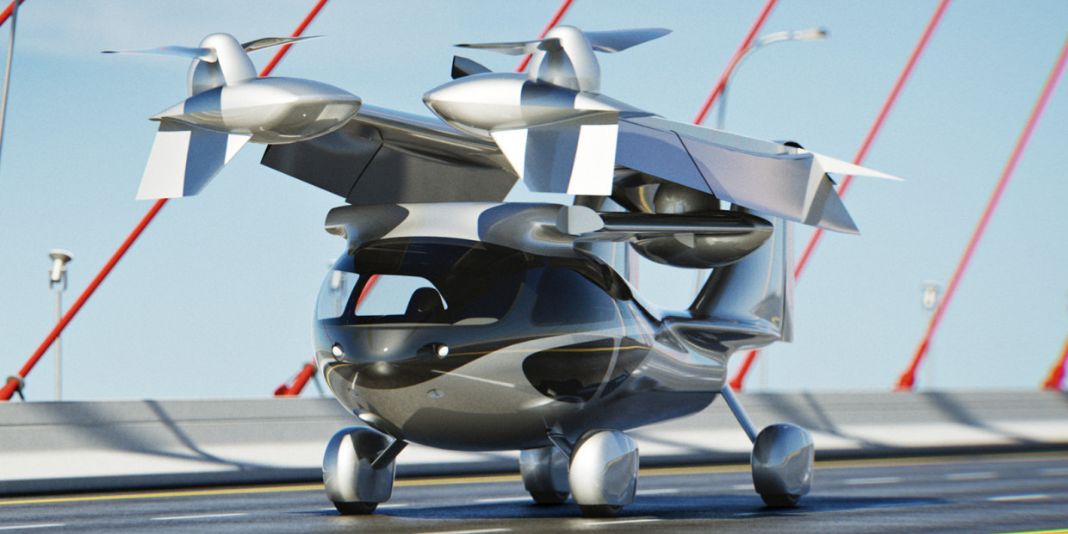
A new generation of drive-and-fly technology could soon take transportation from the road to the sky, with Huntsville helping advance the effort.
The University of Alabama in Huntsville and California-based aerospace company ASKA have signed a memorandum of agreement to explore joint research and development of hybrid-electric, autonomous drive-and-fly vertical takeoff and landing aircraft, commonly known as VTOL vehicles.
The agreement creates a framework for collaboration between UAH’s Rotorcraft Systems Engineering and Simulation Center and ASKA, a global leader in hybrid-electric drive-and-fly technology.
Under the partnership, researchers and engineers will examine opportunities involving battery systems, electric motors, simulation environments, safety systems and autonomous flight control technologies. The effort aims to advance safe, efficient and scalable aerial mobility solutions.
“This agreement represents an important step toward advancing the development of safe, efficient and autonomous aerial mobility solutions,” said Guy Kaplinsky, CEO of ASKA. “By working with UAH’s Rotorcraft Systems Engineering and Simulation Center, we aim to combine cutting-edge research with real-world development, accelerating innovation while preparing the next generation of aerospace leaders.”
Beyond research, the collaboration includes plans to jointly pursue U.S. Department of Defense aligned opportunities and international programs. ASKA was recently awarded a project in Singapore, where the country’s 64-island environment provides a realistic testbed for medical evacuation and distributed logistics operations, missions similar to those envisioned for the Indo-Pacific region.
UAH officials say the university’s expertise in autonomy, uncrewed aircraft systems and Federal Aviation Administration integration positions it as a strong partner in shaping next-generation air mobility.
“The UAH RSESC performs a wide variety of autonomous aerospace research, and we are excited about this partnership and applying our autonomy, UAS design and FAA expertise to support this initiative,” said Jerry Hendrix, director of RSESC/A2R. “Let’s make the future happen!”
The memorandum also outlines potential workforce development and educational initiatives, reinforcing a shared goal of preparing students and researchers to lead in advanced aerospace technologies.
RSESC focuses on applied research and systems engineering to support government, commercial and industry partners, with capabilities in vertical lift, uncrewed aircraft systems, model-based systems engineering and systems integration.
ASKA operates at Eagle Field Airport in California, where its A5 drive-and-fly platform continues operational validation. The company markets its technology for emergency response, contested logistics and commercial transportation applications.
With Huntsville’s deep roots in aerospace innovation, the partnership signals another step toward blending ground mobility and flight into a single, autonomous platform, turning science fiction into engineering reality.