HUNTSVILLE – Transcendentalist poet and philosopher Ralph Waldo Emerson once wrote that every revolution was first a thought in one man’s mind, and when the same thought occurs to another man, it is the key to that era.
It’s all but certain that Emerson wasn’t referring to new millennium technology when he penned that line in the 1840s essay, but it seems to fit the moment.
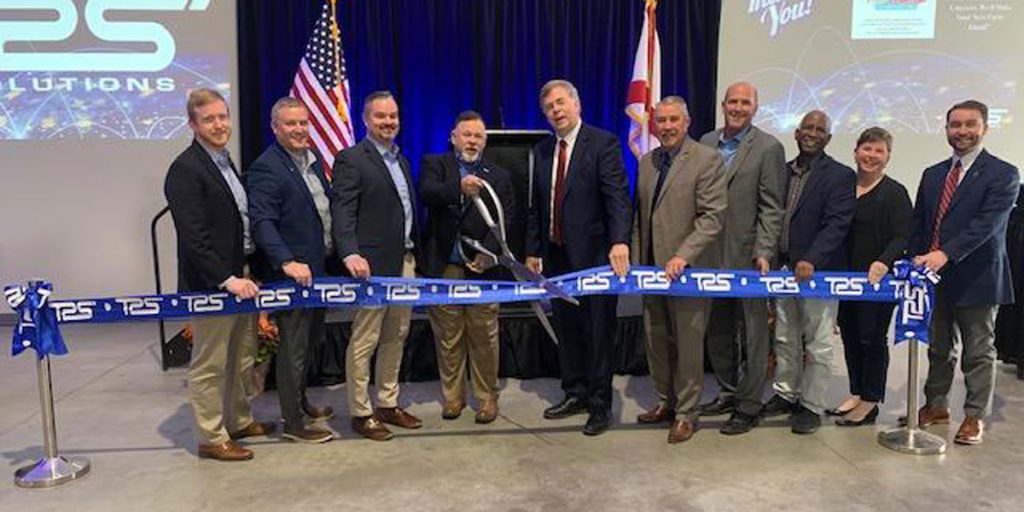
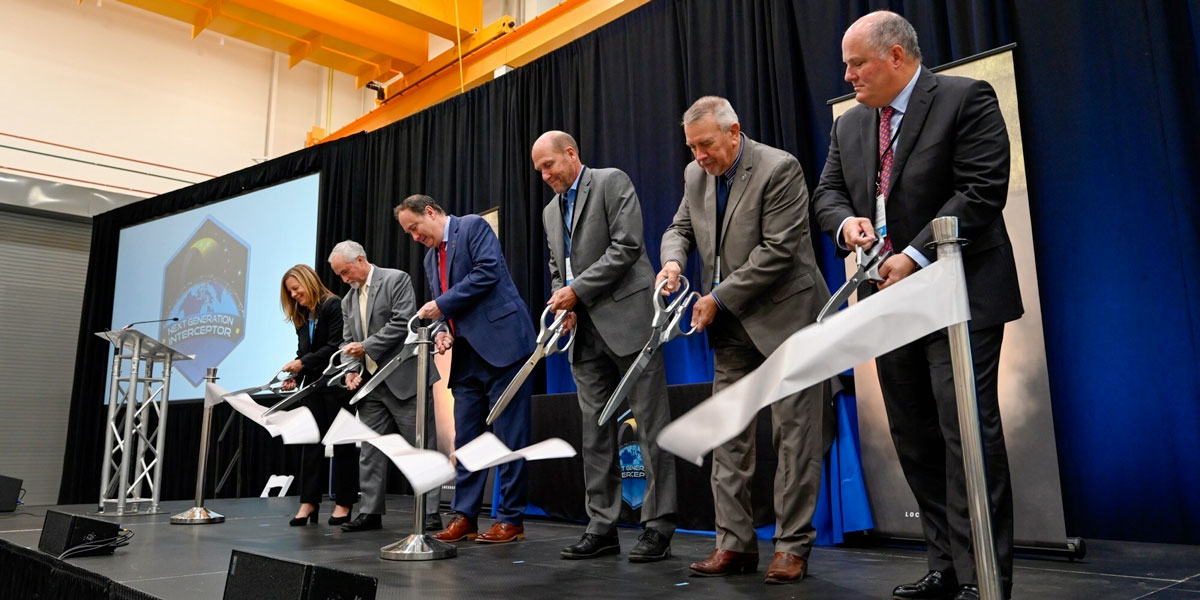
That moment was Tuesday’s ribbon-cutting at Lockheed Martin’s $16.5 million Missile System Integration Lab in Cummings Research Park. The lab will be home to the New Generation Interceptor program.
Revolution was a buzzword among Lockheed Martin representatives at the ceremony, which was also attended by Madison County Commission Chair Mac McCutcheon and Madison Mayor Paul Finley amid other VIPs.
“Why is this so important?” Sarah Reeves, vice president of NGI, asked the audience during a news conference held in concert with the ribbon cutting. “I’ll answer that in one word – revolutionary.”
Robert Lightfoot, executive vice president of Lockheed Martin Space, said the NGI program will “revolutionize work in national security.”
On the wall of the hangar-like 25,000 square-foot facility that includes a crane as well as lab space is a large poster with the words, “Revolutionizing US Homeland Missile Defense.”
So why revolutionary?
The MSIL brings new digital capability to the NGI program, allowing Lockheed Martin to move with what it says will be “speed and agility in support of our customer’s priorities.”
“We’re taking a very large step to be the latest technology out there,” Reeves said, adding that Lockheed Martin has 17 internal suppliers nationwide to facilitate the supply chain.
The ribbon-cutting came on the heels of a groundbreaking ceremony Monday at Boeing, where the company is expanding its factory that produces the Patriots Advanced Capacity-3, which provides seeker guidance data to the Patriot missile surface-to-air defense system.
Lockheed Martin is the prime contractor for PAC-3 and produces the NGI interceptor. Boeing makes the seekers and is a subcontractor.
According to Lockheed Martin, its family of missiles are combat-proven Hit-to-Kill interceptors that defend against incoming threats including tactical ballistic missiles, cruise missiles and aircraft. Demand for PAC-3 continues to increase across the globe. To meet demand, Lockheed Martin has received funding to increase annual production rates to 550 PAC-3 MSEs.
In another note, Lightfoot pointed out that Lockheed Martin has invested $300,000 in North Alabama communities through nonprofit and postsecondary institutions.
“Lockheed Martin is committed to North Alabama and this facility is further evidence of that,” he said. “We are pleased to celebrate adding an advanced facility to our Huntsville campus today — the same year we mark 60 years in the Rocket City supporting our customers.”
For additional information, visit www.lockheedmartin.com.