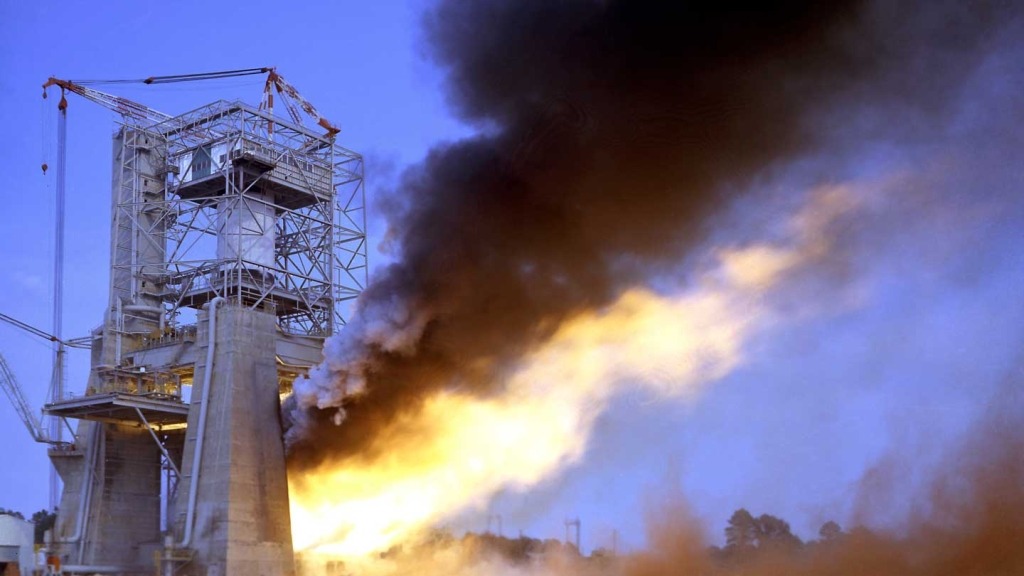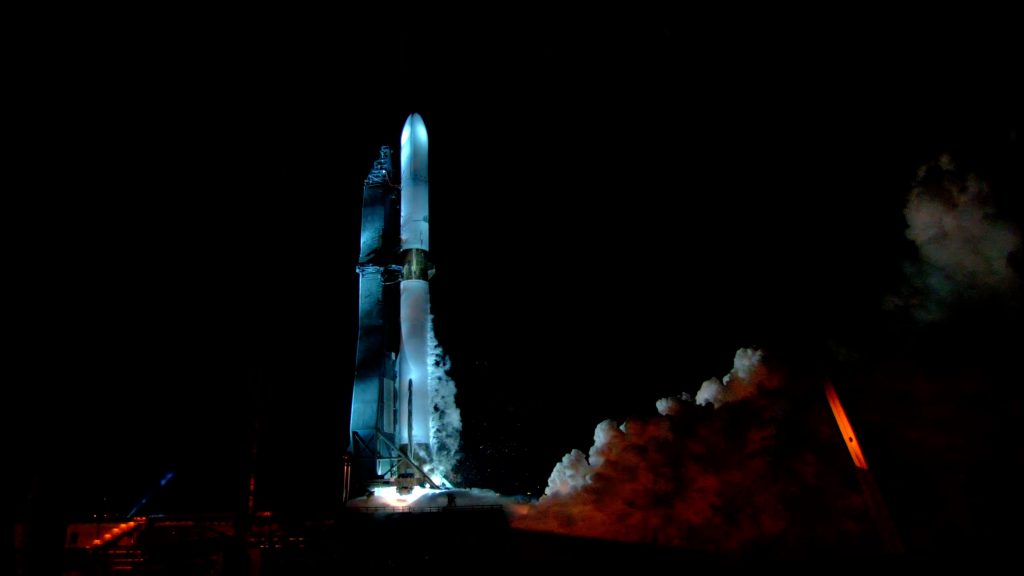
Blue Origin continues to assess the damage following an explosion involving its New Glenn rocket during a hot-fire test at Cape Canaveral late Thursday, an incident highlighting the rigorous testing campaigns required as Blue Origin advances one of its most significant launch programs connected to North Alabama operations.
The explosion occurred during a prelaunch engine test involving the company’s 321-foot New Glenn rocket at Launch Complex 36 in Florida. Images and video from the scene showed a large fireball erupting around the launch pad, with reports indicating the blast could be seen and felt miles away.
“We experienced an anomaly during today’s hotfire test. All personnel have been accounted for. We will provide updates as we learn more,” Blue Origin said in a statement posted to social media shortly after the explosion.
The company confirmed that no injuries were reported.
Blue Origin has not yet released details regarding the cause of the incident or the extent of damage to the launch infrastructure, though reports indicate the company’s launch pad sustained significant damage.
New Glenn is central to several future NASA and commercial programs, including missions supporting NASA’s Artemis campaign to return astronauts to the moon and establish a long-term lunar presence near the moon’s south pole. While the full impact remains unclear, the explosion could affect the timeline for some upcoming missions as investigators determine the cause and assess damage to launch infrastructure.
NASA Administrator Jared Isaacman referred to the explosion as an “anomaly” in a statement posted to X.
“NASA is aware of the anomaly that occurred tonight at Launch Complex 36 involving Blue Origin’s New Glenn rocket at Cape Canaveral Space Force Station. Spaceflight is unforgiving, and developing new heavy-lift launch capability is extraordinarily difficult. We will work with our partners to support a thorough investigation of this anomaly, assess near-term mission impacts, and get back to launching rockets,” Isaacman said.
He continued, “We will provide information on any impacts to the Artemis and Moon Base programs as it becomes available.”
The New Glenn program carries significant ties to Huntsville, where Blue Origin manufactures and tests propulsion systems supporting several of the company’s major space initiatives.
At its Huntsville facilities, Blue Origin produces BE-4 rocket engines used on the New Glenn launch vehicle, along with BE-7 engines and precision thrusters tied to the company’s lunar lander programs. The company also conducts hot-fire testing operations at Redstone Arsenal.
The high-profile test incident comes during a period of major expansion for Blue Origin in Alabama. Earlier this year, the company announced plans to add more than 100 jobs in Huntsville tied to growing thruster production operations connected to lunar and deep-space missions.
Industry observers note that large-scale propulsion and launch testing campaigns routinely involve extensive evaluation, redesign and repeated testing as companies push increasingly complex systems toward operational flight readiness.
The New Glenn rocket is expected to play a major role in future commercial satellite launches, national security missions and NASA’s long-term plans to return astronauts to the moon, making the outcome of the investigation closely watched across the aerospace industry.