We are well into our path in the 21st century, and it is essential that we continue looking ahead— remaining mindful of how we can provide an improved standard of living and a brighter future for all citizens our region the years to come.
One of the most important factors in achieving a higher standard of living is higher education. That is hardly a profound statement. Numerous studies show a direct correlation between higher levels of education and increased income. It is a relationship most people readily accept. Our minds are the most valuable asset we can cultivate if we hope to sustain and strengthen the Valley’s advanced workforce.
Rocket scientist Dr. Wernher von Braun spoke early and often about the importance of brainpower when he arrived in Huntsville in 1950. He played a pivotal role in developing the Army’s missile program and later helped lead the peaceful pursuit of space exploration following the establishment of NASA.
In the early 1960s, Dr. von Braun addressed a joint session of the Alabama Legislature. He emphasized the need to develop the academic and research talents of Alabamians.
Following President John F. Kennedy’s challenge to land a man on the moon and return him safely to Earth, Dr. von Braun told lawmakers that Alabama could play a critical role if the state was bold enough to rise to the challenge.
History, of course, proved him right. Just eight years later, Neil Armstrong, Buzz Aldrin, and Michael Collins rode an Alabama-developed Saturn V rocket into space. Armstrong and Aldrin would walk on the Moon, leaving their footprints at Tranquility Base.
I recently revisited Dr. von Braun’s address to better understand the environment of that time. Several passages stood out.
“Opportunity goes where the best people go, and the best people go where good education goes. To make Alabama more attractive to technical and scientific talent — and to further develop the people we already have — the academic and research environment of Huntsville and Alabama must be improved.”
He also made a compelling case about what truly drives economic growth: “Let’s be honest with ourselves. It’s not water, real estate, labor, or low taxes that bring industry to a state or city. It’s brainpower.”
Von Braun placed particular emphasis on advanced degrees—master’s and doctoral programs— as well as strong undergraduate education in STEM fields. Motivated in part by his vision, the Alabama Legislature approved funding to establish a research institute in the Valley.
In another address to Huntsville community leaders, he stated: “I am persuaded that we who make our homes in this community believe this area is destined to grow into a great and permanent scientific, educational, and industrial center.”
Those words have become reality. I refer to this period as “von Braun Vision 1.0”— a seed planted in 1961 that has yielded remarkable and lasting success.
The question now is: What comes next? How do we define Vision 2.0?
It is essential that we stay the course—continuing to expand our intellectual capabilities along the path established during the past half-century.
The Tennessee Valley has become one of the world’s leading centers for research and development driven by the extraordinary talent that calls this region home. Our best path forward is to cultivate and recruit the next generation of innovators while continuing to expand academic and research programs at our four-year institutions: the University of Alabama in Huntsville, Athens State University, Alabama A&M University, and the University of North Alabama. These universities are critical to developing the advanced workforce of our future and supporting companies in Cummings Research Park and federal agencies on Redstone Arsenal.
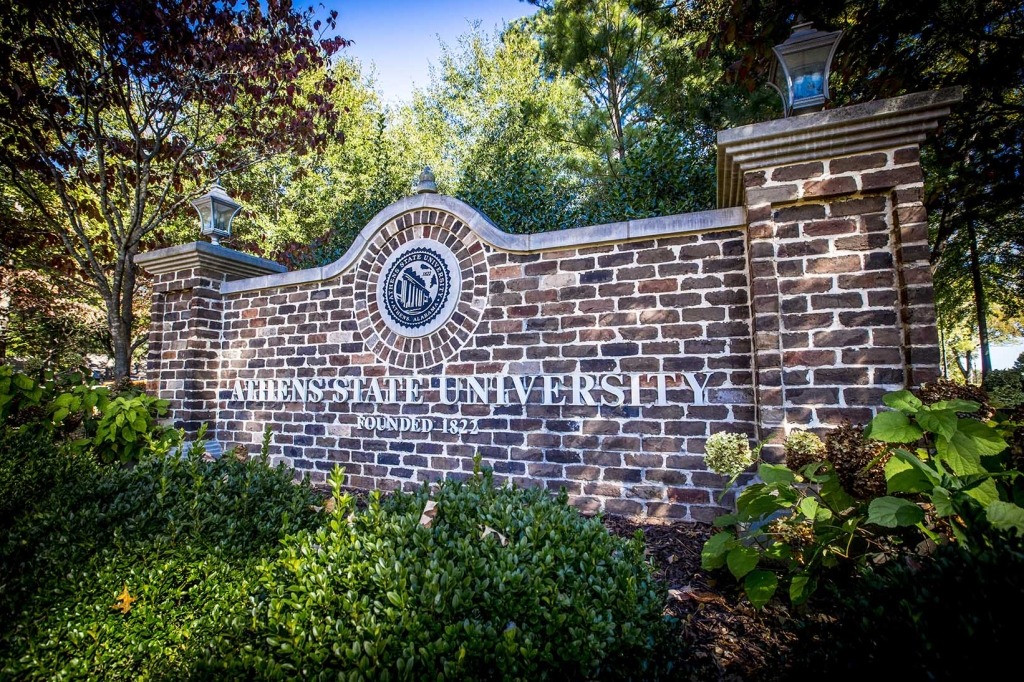
Gains have been made at each of these institutions of higher learning, but Athens State has been most aggressive during the last few years adding coursework at the undergraduate and graduate levels for students seeking to find their way to become active members of the Valley’s economy. Some of those courses include: advanced manufacturing, aerospace systems management, computer science, cybersecurity, homeland and corporate security, chemistry, management of technology, acquisition, logistics and contract management.
Healthy budgets and increased responsibilities
Interestingly enough, the driving forces that powered the Valley’s economy in the 1960s are similar to the local economy of the 2020s; namely space and defense. This includes healthy increases for Army agencies headquartered at Redstone and NASA’s Marshall Space Flight Center. But the the good news doesn’t end with those existing agencies. The U.S. Space Command will be transferring its operations from Colorado to north Alabama during the next five years creating 1,700 direct jobs and another 3,000 from economic spinoff positions. Perhaps a new wrinkle during this time period involves another major transfer of responsibilities from the Federal Bureau of Investigations. The FBI has committed a healthy increase in its local workforce. The FBI currently has a local workforce of 1,300 employees but plans to grow an additional 4,000 to 5,000 jobs by 2030.
At the same time, we are witnessing a renewed sense of national pride through major global initiatives. NASA’s Artemis program represents the next chapter in deep space exploration, aiming to return humans to the Moon for the first time in more than 60 years. Meanwhile, the Valley continues to demonstrate its unmatched capabilities in missile defense through the work of the federal agencies and private-sector partners on Redstone Arsenal and Cummings Research Park.
The energy and excitement generated by high profile success and agency growth can propel the Valley toward even greater achievements as we advance further into the 21st century. This is the natural progression of our Vision 2.0 — build on a legacy of innovation to shape an even brighter future.
The energy exists. The momentum is real. But momentum only matters if we act on it. The leaders who shaped this region decades ago made bold decisions. They didn’t wait for opportunity — they built it. We’re being given that same chance. If we want the Valley to remain a leader—not just in Alabama, but on the global stage — we have to invest in the one thing that has always delivered results — Brainpower.
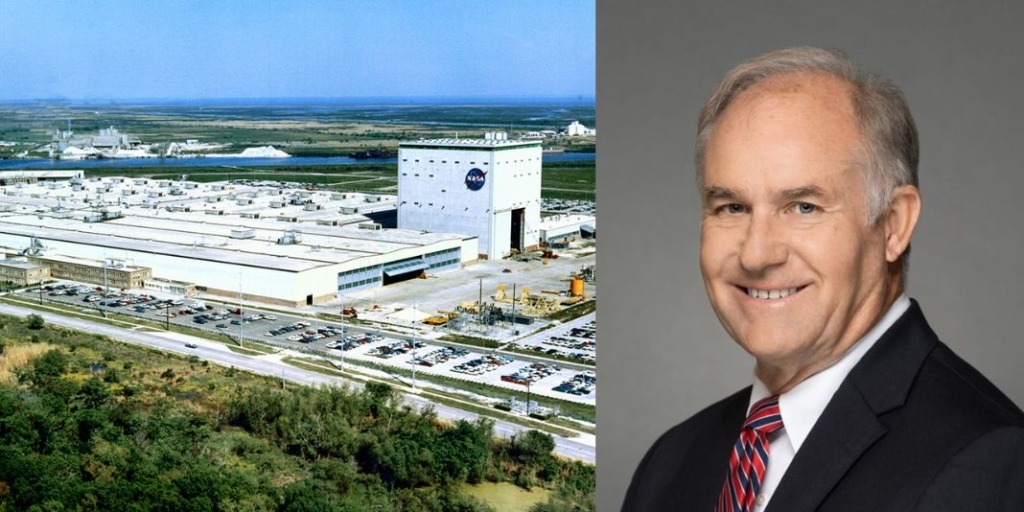
Ray Garner served in the Alabama Legislature from North Alabama and was a member of the Education Finance Committee in the Alabama House of Representatives. He is also the former business editor of The Huntsville Times.