Astronauts aboard the International Space Station don’t do laundry. That’s where researchers at The University of Alabama in Huntsville believe they can help.
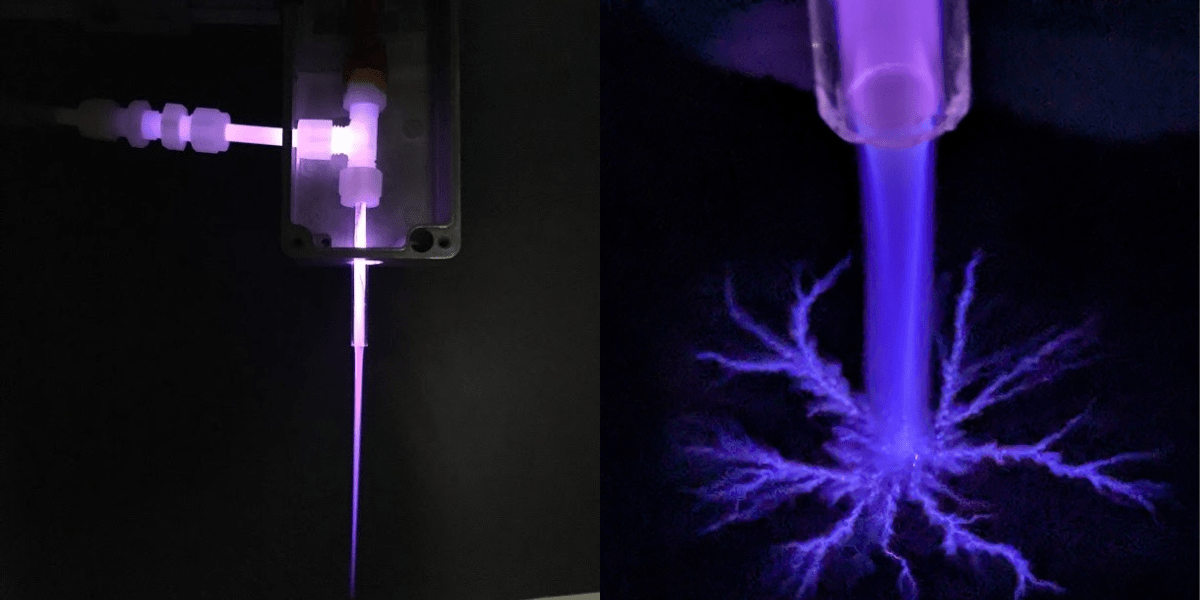
A team at UAH is developing a handheld device that uses cold plasma to sanitize clothing, bedding and other fabrics without water or traditional cleaning chemicals. The technology is designed to help astronauts stay healthier during long-duration missions while reducing the need for water-intensive laundry.
The project is led by Dr. Gabe Xu, a professor of mechanical and aerospace engineering at UAH, in collaboration with NASA’s Marshall Space Flight Center.
The research tackles a problem most people never think about. Water is one of the most valuable resources aboard a spacecraft, making traditional laundry impractical during missions that could last months or even years. At the same time, astronauts still need clean clothing and living spaces to reduce exposure to bacteria.
To address that challenge, UAH researchers have created what they call a ‘laundry gun’ that blasts cold plasma into fabrics to sanitize them. The device could also be used to treat spacesuits and equipment before astronauts venture onto the lunar or Martian surface.
“The purpose of the laundry gun is to sanitize soft material, such as fabrics on couches, bedding, clothes, etc. in enclosed space habitats like the International Space Station or on lunar and Mars expeditions,” Xu explained. “This will reduce the microbial load and keep clothes and other soft surfaces clean, at least microbially, for astronaut health. It could also be used to sterilize space suits and tools before they leave the habitat and step foot on Mars. To be clear, though, this won’t remove coffee or grass stains (though we haven’t tried that). So, it won’t make your clothes less dirty, just remove bacteria.”
Unlike a washing machine, the device doesn’t remove dirt or stains. Instead, it produces cold plasma that creates highly reactive particles capable of destroying bacteria, helping keep fabrics microbiologically clean without consuming precious water supplies.
The idea grew out of earlier efforts to sanitize spacesuits and tools before they are used on other worlds. Researchers soon realized the same technology could help solve the broader challenge of maintaining clean living quarters during long-duration missions where conventional cleaning methods are not practical.
“This experiment has been a partnership between my lab at UAH and Dr. Chelsi Cassilly at NASA MSFC,” Xu said. “We have been looking at plasma for sanitization for planetary protection for a couple of years with UAH providing the plasma science and engineering. Plasma can contribute not only to planetary protection for killing bacteria, but also for increased growth of plants for space agriculture and breakdown of waste for waste processing for human space flight.”
The technology is still in the laboratory testing stage, and researchers say more engineering work is needed before it can be used in space. Their next step is designing a larger handheld device that can treat larger fabric surfaces while safely removing ozone created during the sanitization process.
Beyond sanitizing fabrics, Xu said plasma technology could eventually support other aspects of human space exploration, including water purification, growing crops, processing waste and reducing the amount of supplies astronauts need to carry on future missions.
“The use of plasma treatment could significantly reduce the mass of goods needed for a human mission, especially one to Mars where resupply is difficult,” Xu said. “With just electricity, air, water and perhaps other gases, the plasma could help tackle sanitization, space crops, water purification, air revitalization, waste processing and even regolith treatment [lunar or Martian soil]. Of course, those applications are also in the early stages and focused efforts will be needed to bring this technology to flight.”
Sherri Blevins is a reporter for 256 Today.
Got a tip for OTR? Send your tip to [email protected] with related photo/video, your name, phone number, and e-mail address.