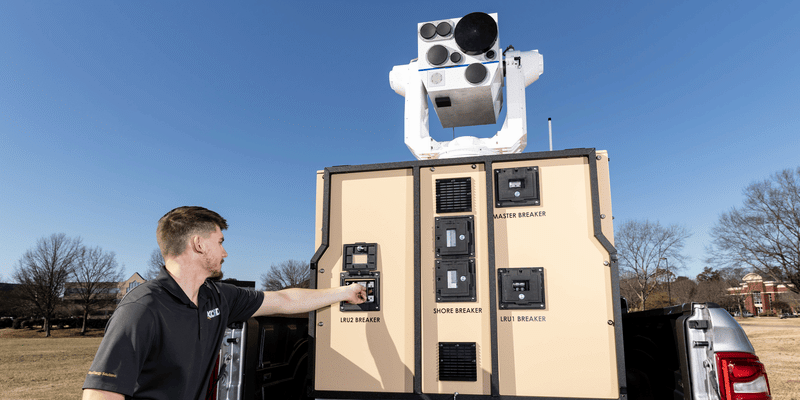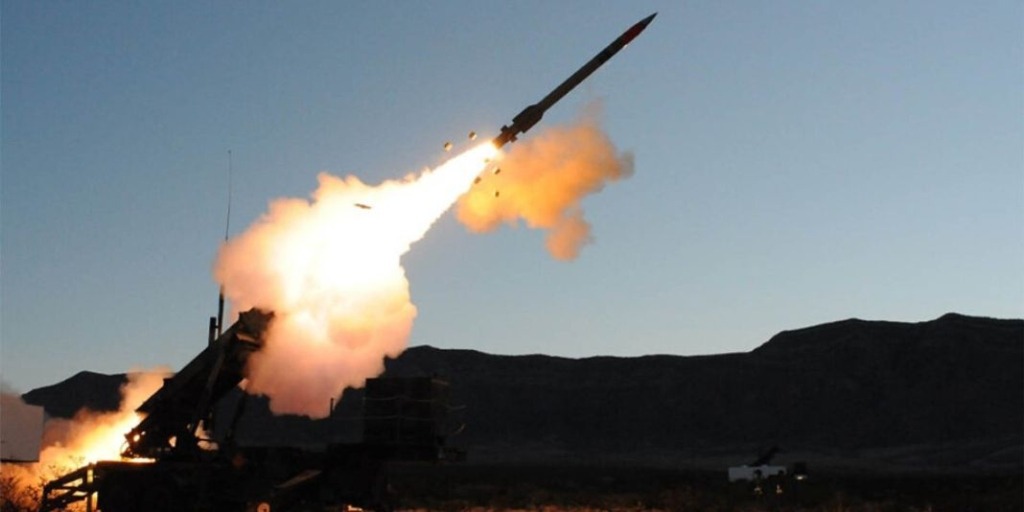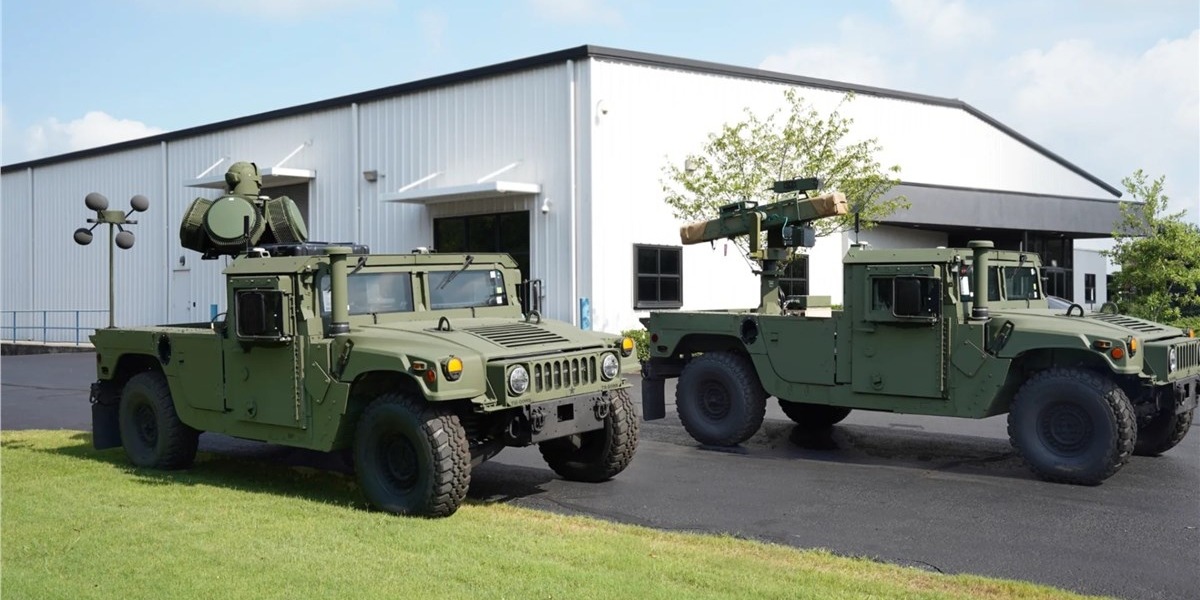
A Huntsville defense company has demonstrated a system that can hear an approaching drone, use artificial intelligence to find and track it, and provide a weapon system with the information needed to destroy it — without sending out a signal that could reveal troops’ location.
Invariant Corporation announced Wednesday that it successfully integrated its FireFLY passive acoustic sensor and AI-driven detection technology with its Surface to Air Kinetic Engagement system, known as STAKE.
Together, the technologies create what the company calls a fully passive sensor-to-effector kill chain, moving from detection toward a potential strike without relying on radar or radio-frequency transmissions.
The process begins with sound.
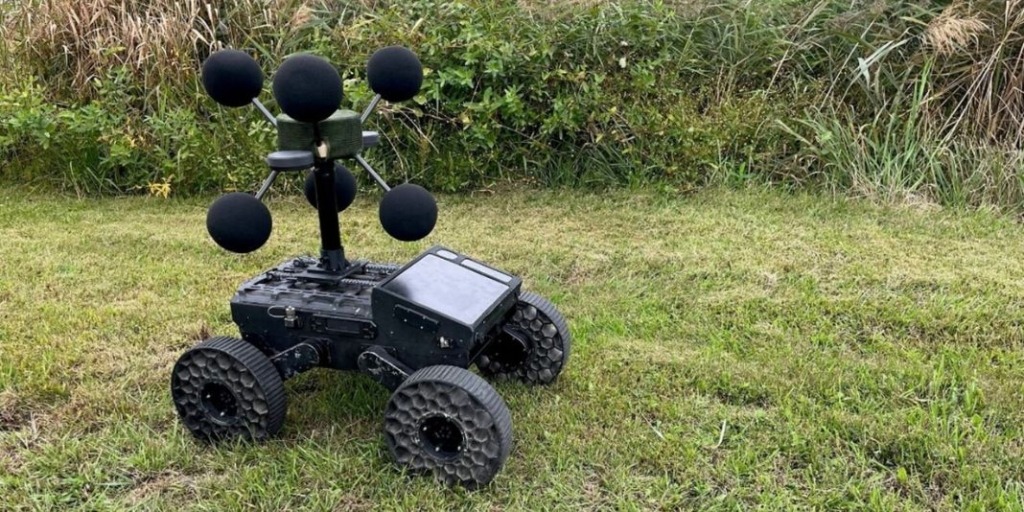
FireFLY listens for the acoustic signatures generated by unmanned aircraft and uses those sounds to detect and classify an approaching drone and determine its location and altitude. The system does not have to transmit radar or radio-frequency energy to do it.
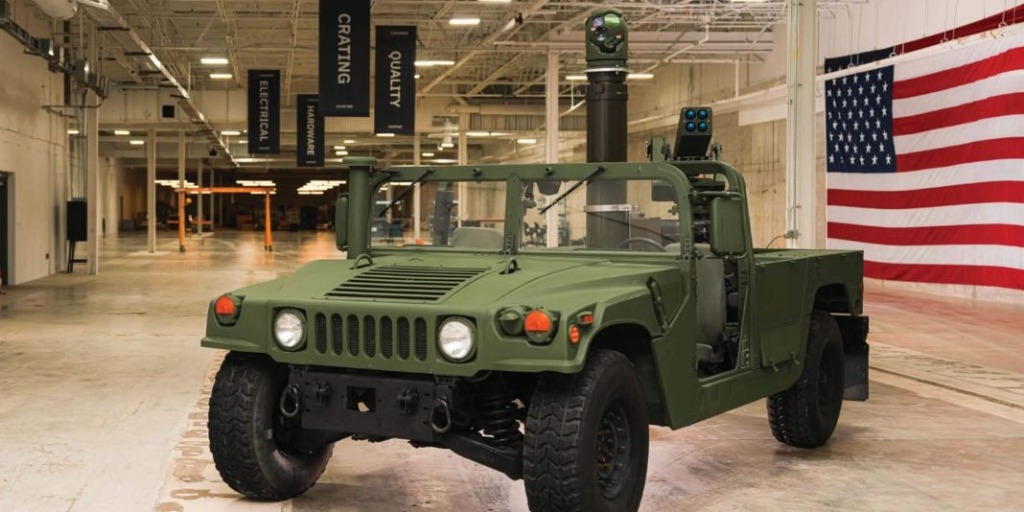
Once FireFLY detects a potential drone, it automatically points Invariant’s electro-optical/infrared sensor toward the area. An onboard artificial intelligence system called Drone Vision searches live video for the aircraft, locates it and continues tracking it as it moves.
That tracking information can then be passed to STAKE, giving the weapon system information needed to engage a confirmed threat.
“Small UAS have created an urgent need for distributed sensing and affordable defeat capabilities that can operate with maneuver forces in contested environments,” Invariant President Danny Levis said. “FireFLY adds passive acoustic coverage where radar and RF are challenged. By integrating that passive acoustic detection directly with a proven kinetic effector, we’ve completed a sensor-to-effector kill chain that detects and defeats unmanned aerial systems without ever emitting a signal. It gets us from detection to defeat faster, with less equipment and a smaller electromagnetic footprint. Invariant identified where the battlefield is heading and built for it.”
The ability to detect drones without giving away a unit’s position has become increasingly important as unmanned aircraft reshape the battlefield.
A December 2025 U.S. Army article on countering unmanned aircraft described radar-based detection as potentially making military positions easier for an adversary to find because of the electromagnetic signals it generates. The article said maneuver and support units need passive detection systems to reduce their electromagnetic signature.
The Army has also been studying the use of sound to find drones. In April, the Army published “Listening to the Sky: Acoustic Drone Detection Systems – Ukraine & Emerging Technologies,” examining acoustic detection and its potential role in countering unmanned aircraft.
Invariant’s system is not intended to replace radar or other methods of finding drones. Instead, the company says FireFLY can add another layer of detection when radar or radio-frequency systems are limited by terrain, low-altitude flight or drones that do not rely on traditional radio control.
That fits with the military’s broader move toward layered drone defense.
The Department of War’s Joint Interagency Task Force 401 discussed that approach in its June publication, “Small Drones, Big Problems: A First Principles Approach to Countering-UAS.” The publication examines the need to combine different detection and defensive capabilities rather than depend on a single solution to the rapidly changing drone threat.
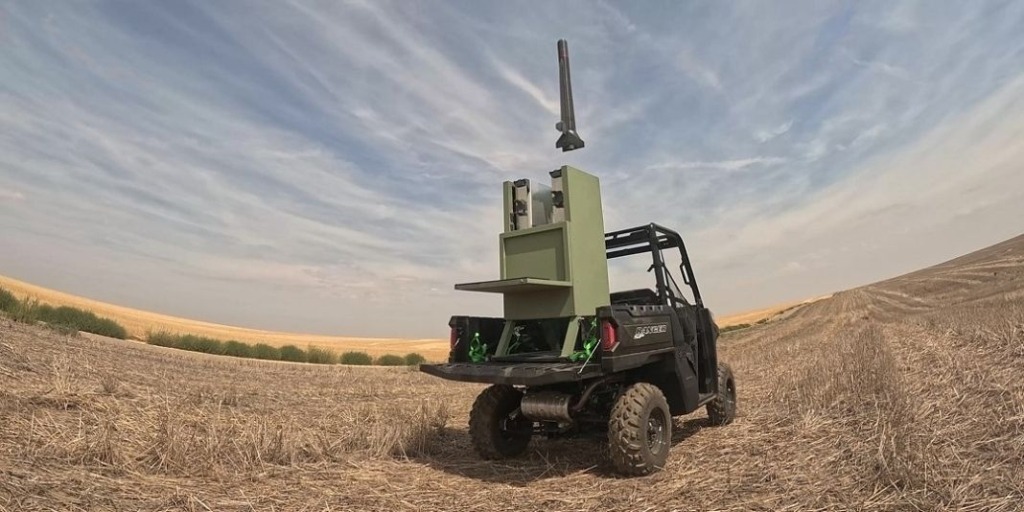
For the final step in Invariant’s system, STAKE uses the Advanced Precision Kill Weapon System, or APKWS, with a proximity fuse and fragmenting warhead to destroy unmanned aircraft. Invariant estimates the cost at about $30,000 per shot.
Although AI can automatically locate and track the drone, the company says the system maintains human control over the decision to engage a target in accordance with applicable rules of engagement and weapons-release requirements.
FireFLY also has uses beyond drone detection. According to Invariant, the system is deployed globally and can detect gunshots, rocket and mortar fire and conventional aircraft in addition to unmanned aircraft. It was jointly developed by Invariant and Hyperion Technology Group of Tupelo, Mississippi.
Invariant plans to continue testing the integrated system and conducting demonstrations with U.S. government and industry partners. Future work will include expanding the area covered by acoustic detection, adding identification and tracking sensors and connecting the system with government command-and-control networks.
Sherri Blevins is a reporter for 256 Today.
Got a tip for OTR? Send your tip to [email protected] with related photo/video, your name, phone number, and e-mail address.