A major U.S. Army counter-drone exercise in Eastern Europe is highlighting the rapidly expanding role of autonomous drone and counter-drone technology, an area where Huntsville and North Alabama continue to emerge as key players in military innovation.
Project Flytrap 5.0, led by U.S. Army as part of the larger Saber Strike 26 exercise in Lithuania, concluded this week after testing dozens of emerging technologies designed to defeat hostile drone swarms and operate in increasingly electronic warfare-heavy combat environments.
According to the Department of Defense, the exercise integrated more than 50 industry-provided systems, including radars, radio-frequency defeat systems, kinetic interceptors, launched effects and unmanned ground vehicles. The technologies were tested against live opposing forces near the Belarusian border.
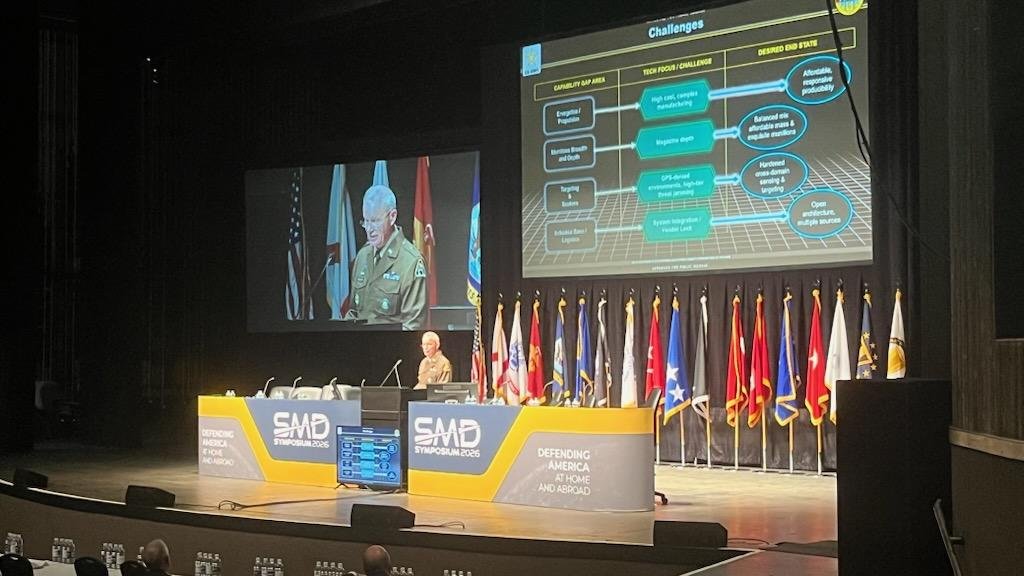
“We are transforming to enable offensive maneuver in a drone and electronic-warfare saturated environment, and Flytrap is essential to making that happen,” Army Gen. Christopher Donahue, commander of U.S. Army Europe and Africa, said in the release. “This effort is about getting technology into the hands of soldiers, in the field, to figure out what works and what doesn’t.”
While the Pentagon did not publicly identify participating contractors, the exercise reflects a rapidly growing defense sector closely tied to Huntsville’s military and aerospace ecosystem. North Alabama has become a hub for autonomous systems, counter-uncrewed aerial systems, artificial intelligence-enabled targeting and electronic warfare research as the Pentagon increasingly prioritizes drone warfare capabilities.
The Army said Project Flytrap has evolved from testing individual soldier-level counter-drone systems into large-scale squadron operations involving U.S. and allied forces. Officials described the initiative as part of NATO’s broader Eastern Flank Deterrence Initiative, which focuses on linking battlefield sensors, autonomous systems and artificial intelligence to accelerate battlefield decision-making.
“Success in Flytrap 5.0 is a little different than other exercises — in some ways failure is still success,” said Army Maj. Jared Whitaker, V Corps technical integration and assessment lead for Project Flytrap. “The industry that creates these systems can get immediate feedback, make hardware and technical changes rapidly.”
The exercise comes as Huntsville-area organizations continue expanding work in the same technology space.
Earlier this week, 256 Today reported researchers at The University of Alabama in Huntsville announced continued development of the Skyspear autonomous aerial defense platform, an attack drone and counter-uncrewed aerial system designed for military operations. The system is capable of speeds exceeding 130 miles per hour and includes autonomous targeting and interception capabilities.
Defense firms across North Alabama have also increasingly focused on low-cost interceptor drones, autonomous targeting systems and electronic warfare tools as lessons from conflicts in Ukraine and the Middle East reshape Pentagon priorities.
Project Flytrap organizers said the initiative will continue expanding, with Flytrap 6.0 expected to move to brigade-scale operations in future testing.
Got a tip for OTR? Send your tip to [email protected] with related photo/video, your name, phone number, and e-mail address.