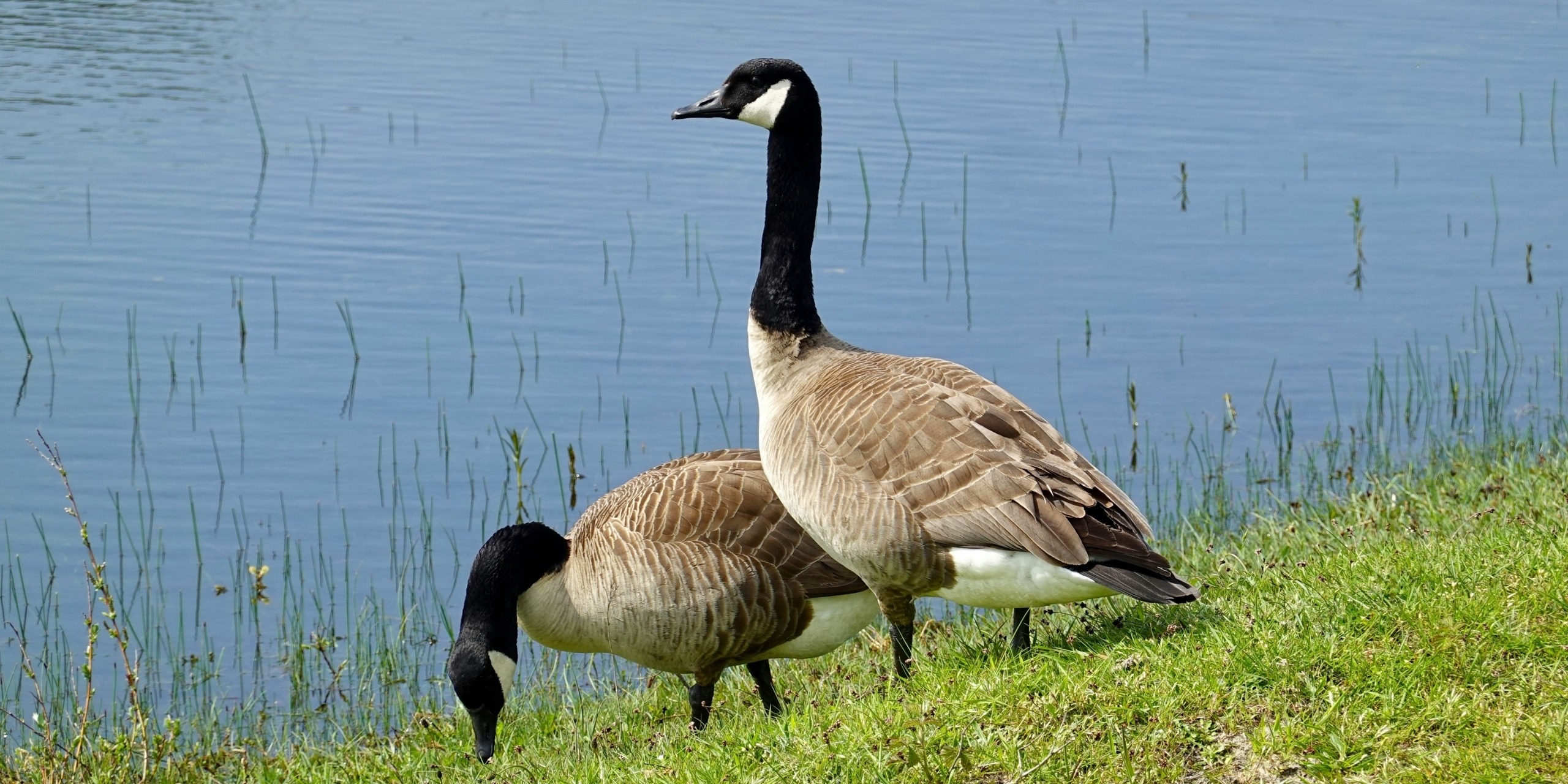
A goose management plan to reduce the Canada goose population at Lady Ann Lake has sparked debate in Madison, with the Edgewater Homeowners Association saying years of non-lethal management efforts have failed to control the flock while residents and animal advocates continue pushing for alternatives.
The controversy centers on more than 220 Canada geese living around the lake in the Edgewater community. HOA leaders say the birds have created concerns involving water quality, public health, common areas and resident safety, while opponents argue the community should continue pursuing non-lethal solutions.
The Edgewater HOA has spent more than six years attempting to manage the resident goose population at the community’s 140-acre lake.
The association said it has relied on non-lethal measures including daily and sometimes twice-daily cleaning of sidewalks, shoreline plantings designed to reduce grazing areas, predator silhouettes and goose-deterrent sprays. Despite those efforts, the HOA said the population has grown to more than 226 birds.
The HOA added it consulted state wildlife officials and USDA Wildlife Services after years of management efforts failed to reduce the population.
“Our goal is not to eliminate geese, but to bring the population back to a manageable, healthy level so that long-term, non-lethal strategies can be effective,” the association said.
The issue drew public attention Sunday when dozens of residents and animal advocates gathered in the Edgewater community to protest the proposed euthanization of the geese.
Residents interviewed by the station urged the HOA to consider alternatives, arguing that another culling would not provide a long-term solution. Some pointed to a previous goose-removal effort and questioned whether eliminating birds would prevent new flocks from eventually returning to the lake.
Others suggested alternative wildlife-management methods, including deterrent techniques used in other settings.
The controversy drew additional attention Monday when Sunlake at Edgewater apartments released a statement clarifying that it was not involved in the HOA’s decision.
Local reports said the complex pays annual dues to the HOA for maintenance of common areas, including landscaping, sidewalks, and lake grounds, but does not have representation on the HOA board and played no role in the decision-making process.
“We want to be transparent: while our apartment community pays annual dues to the Edgewater HOA for the maintenance of common areas — including landscaping, sidewalks, and lake grounds — we do not hold representation on the HOA Board and had no involvement in this decision,” the apartment complex said.
The statement acknowledged that residents have differing opinions on the issue and said those with questions about the process should contact the HOA directly.
The disagreement reflects competing views on how the community should manage the growing goose population at Lady Ann Lake. HOA leaders say action is needed to address concerns about water quality, safety, and maintenance of common areas, while opponents argue the neighborhood should continue pursuing non-lethal alternatives.
Discussions between residents and HOA officials are expected to continue as the controversy surrounding the proposed cull unfolds.
Sherri Blevins is a reporter for 256 Today.
Got a tip for OTR? Send your tip to [email protected] with related photo/video, your name, phone number, and e-mail address.