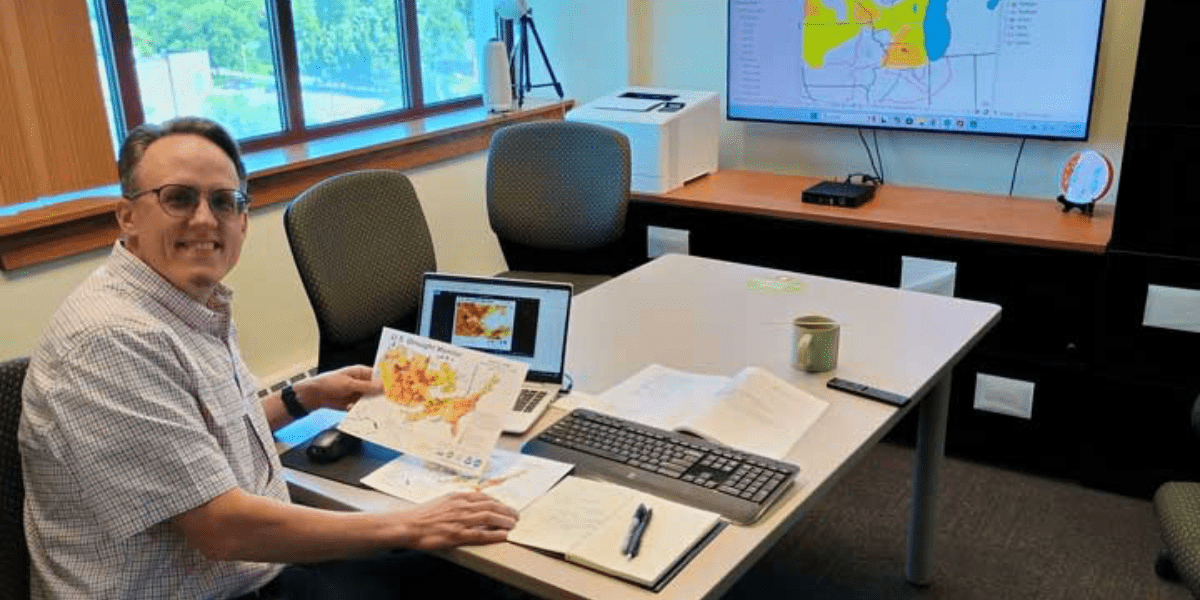
A University of Alabama in Huntsville-led research team has received an $849,000 NASA grant to develop new tools that could help communities across the Southeast detect rapidly developing flash droughts sooner.
The three-year project, led by Jonathan Case, principal research scientist with UAH’s Earth System Science Center, will focus on tracking rapidly drying soils and using artificial intelligence to predict how flash droughts could affect streamflow, giving farmers, water managers and emergency officials earlier warning of worsening conditions.
“Our research team is greatly appreciative of NASA selecting our proposal,” Case said. “We look forward to co-developing and delivering impactful operational tools that will help local, state and national officials better anticipate and prepare for rapid-onset drought events in the Southeast U.S.”
The project will support the Southeast Drought Early Warning System, a regional network coordinated through NOAA’s National Integrated Drought Information System. Partners include the Alabama Office of the State Climatologist at UAH and the Tennessee Climate Office at East Tennessee State University.
Researchers will build on NASA’s SPoRT-LIS land surface modeling system, which combines weather, soil and vegetation data to monitor changing soil moisture conditions. The new project is designed to provide earlier indications of drought development than many traditional monitoring tools.
The team also will use artificial intelligence to better predict how rapidly changing drought conditions affect streams and water resources, information that could help support agriculture, emergency management, water utilities and watershed planning.
“Rapid-onset drought is a growing challenge in Alabama and across the Southeast, particularly for our agricultural communities,” said Lee Ellenburg, Alabama state climatologist. “We are excited to help develop tools that better monitor soil moisture conditions and support drought assessment efforts across the state.”
Project leaders say the research could also help improve future national water forecasting efforts while ensuring new drought-monitoring tools are developed with input from the agencies and officials who rely on them most.
Got a tip for OTR? Send your tip to [email protected] with related photo/video, your name, phone number, and e-mail address.