Senior defense leaders told lawmakers that the proposed “Golden Dome for America” missile defense system is essential to counter what they described as rapidly advancing and increasingly complex threats to the U.S. homeland.
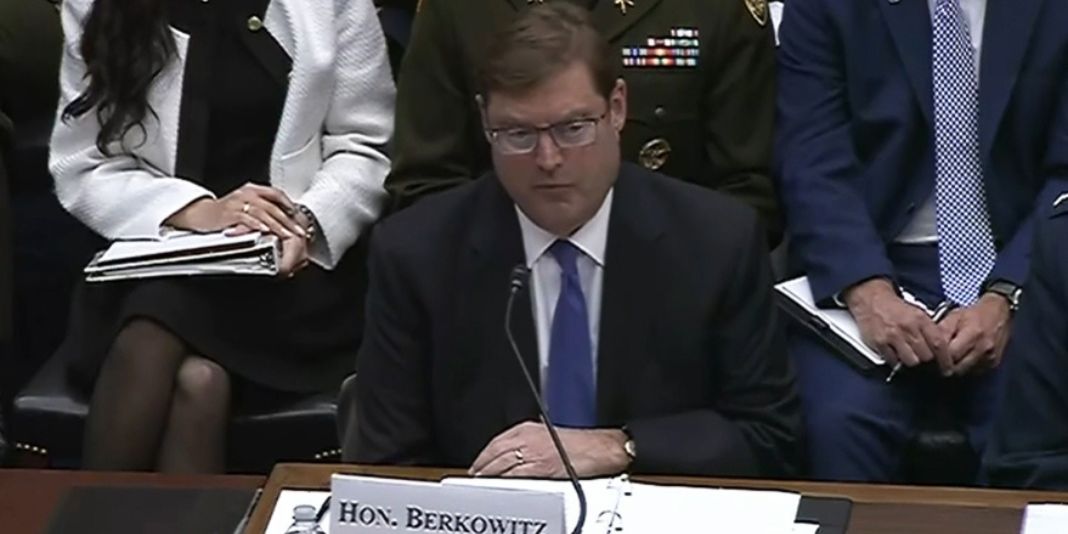
Testifying before the House Armed Services Committee’s Strategic Forces Subcommittee last week, Assistant Secretary of War for Space Policy Marc Berkowitz said the United States faces an “unprecedented” security environment driven by rival nations expanding and modernizing their missile arsenals.
“The pace and scale of the threat is unprecedented,” Berkowitz said. “Rivals are expanding, diversifying and increasing the sophistication of their arsenals.”
Berkowitz described Golden Dome as a comprehensive, layered defense system designed to counter ballistic, hypersonic and advanced cruise missiles, along with next-generation aerial and nuclear threats.
“Golden Dome will protect our homeland, citizens, critical infrastructure and second-strike capability,” he said. “Today, our capability to defend the nation is limited, and its effectiveness is eroding against an increasingly advanced set of threats. Golden Dome will rectify this by creating a layered defense in depth of the United States.”
Huntsville expected to play central role
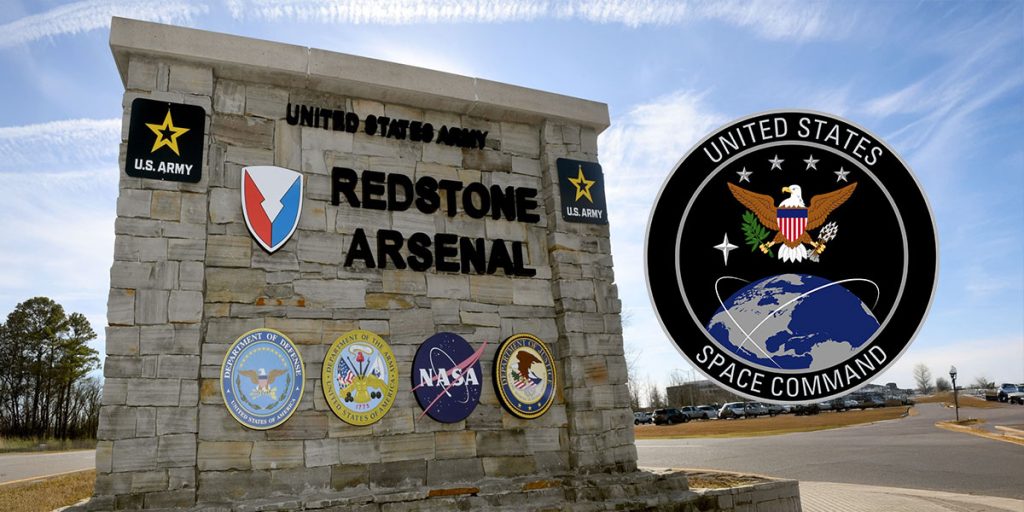
While the Golden Dome program is currently managed from an office in Arlington, Virginia, Huntsville’s Redstone Arsenal is positioned to become a major hub for its development and future operations.
The program is led by Guetlein, who reports directly to the Deputy Secretary of Defense. However, key components of the system are expected to be developed and integrated at Redstone, where the Missile Defense Agency and Army Space and Missile Defense Command are already based.
U.S. Space Command, which is in the process of relocating its headquarters to Redstone Arsenal, is also expected to play a critical role in the system’s long-term operation, particularly in coordinating space-based sensors and missile defense capabilities.
Defense officials have indicated that elements of Golden Dome’s command-and-control infrastructure could ultimately be located at Redstone, though final basing decisions have not been formally announced.
Key challenges ahead
While acknowledging the program’s significant cost, Berkowitz said the investment is justified.
“The cost of failing to defend our homeland would be infinitely greater,” he said.
Air Force Gen. Gregory M. Guillot, commander of U.S. Northern Command and North American Aerospace Defense Command, told lawmakers his commands already conduct routine operations to intercept aircraft approaching North America and remain on constant alert for missile threats.
He pointed to the recent activation of Joint Task Force Gold, which is expected to serve as the operational arm for the Golden Dome system once deployed.
Space Force Gen. Michael A. Guetlein, who is leading the Golden Dome initiative, warned that emerging threats are no longer theoretical.
“Our adversaries are not just expressing the intent. They are demonstrating the capability to threaten our families and our way of life,” Guetlein said. “This threat is not theoretical. We see it unfolding in front of our own eyes every day.”
Guetlein said the program will rely on existing technology integrated with next-generation systems, with an emphasis on speed, affordability and partnerships across the defense sector. A key priority, he said, is building a unified command-and-control network connected to current missile defense systems while reducing the cost per intercept.
Lt. Gen. Heath Collins, director of the Missile Defense Agency, and Army Lt. Gen. Sean A. Gainey, commander of the U.S. Army Space and Missile Defense Command, also testified.
Officials acknowledged significant technical hurdles remain, including integrating space-based sensors with existing defense systems, countering hypersonic weapons and scaling the system to handle large volumes of threats while reducing costs.
Despite those challenges, leaders emphasized urgency, saying early elements could be deployed within the next few years.
Guetlein framed the effort as part of a broader national defense posture.
“The vision is ambitious, but it is achievable,” he said. “Our strategy is built on speed, affordability and partnerships, and it is designed to ensure peace through strength.”