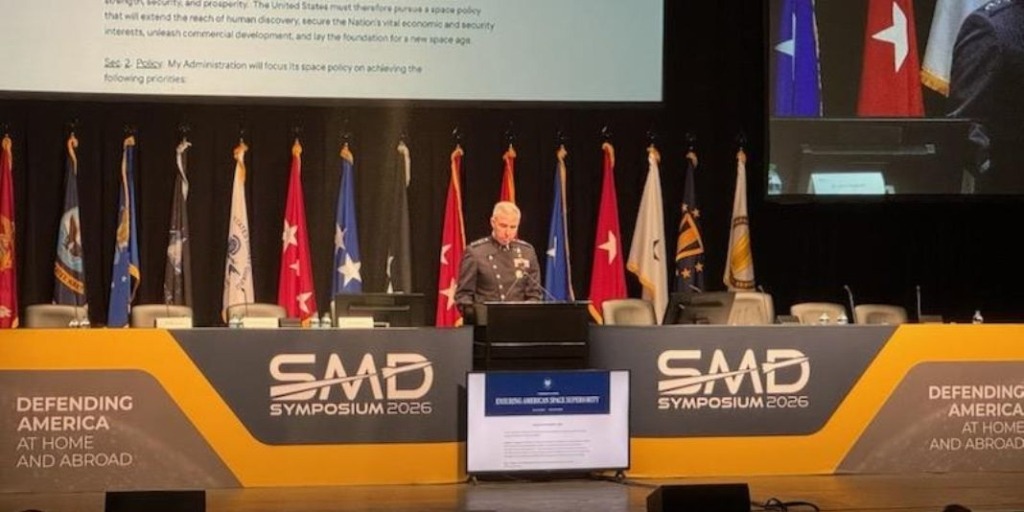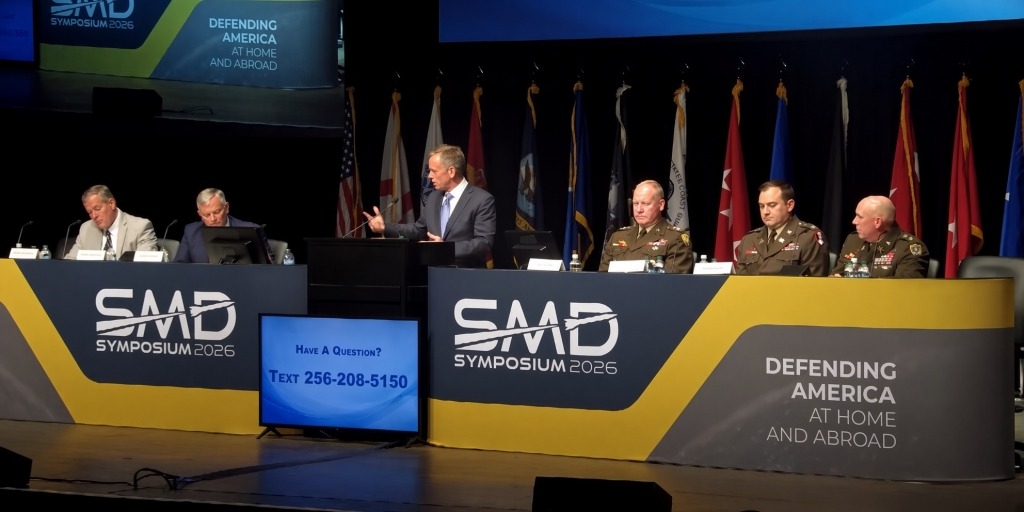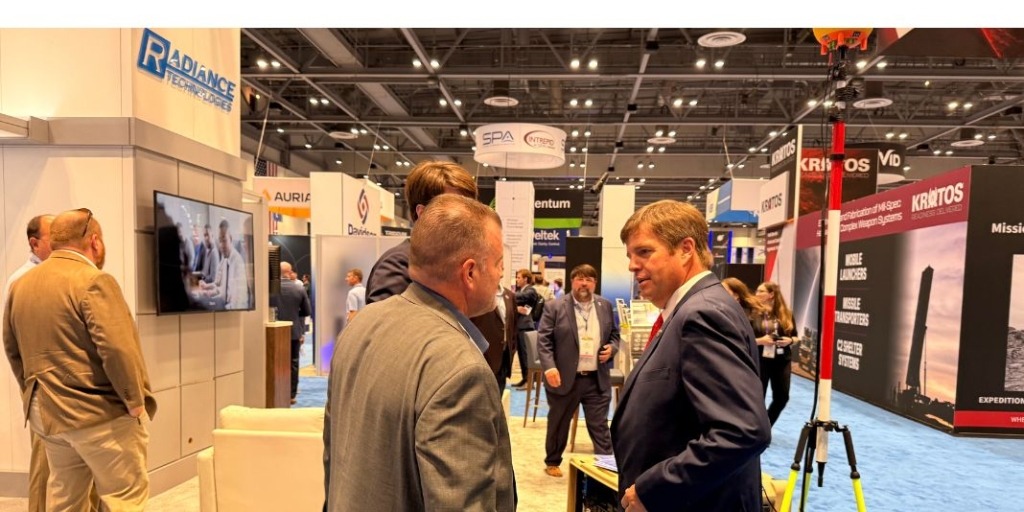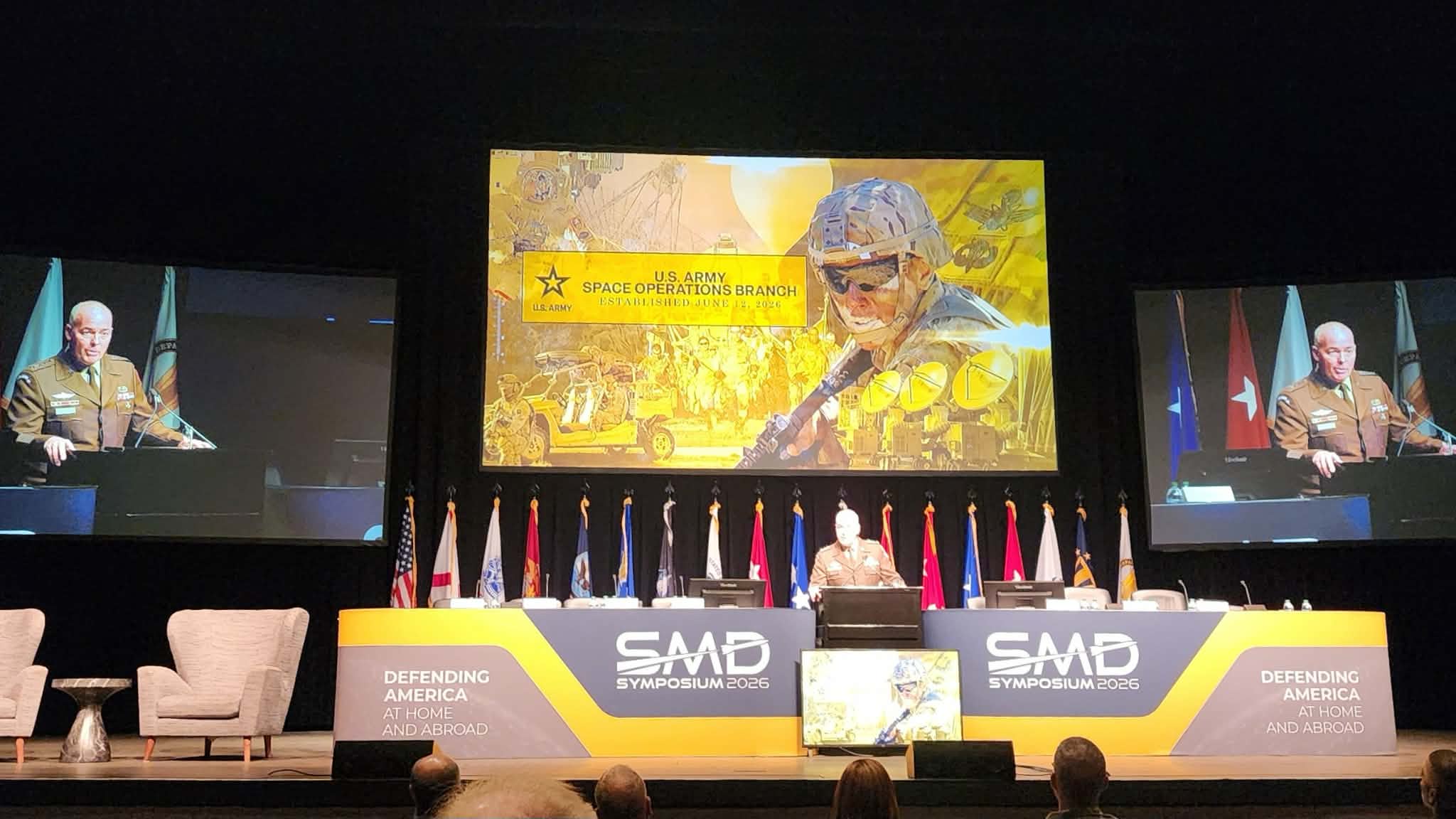
The 2026 Space and Missile Defense Symposium opened Tuesday with a message that carried from the first military briefing of the morning to one of the most anticipated updates of the afternoon: the threat is changing quickly, and the military and defense industry have to move with speed.
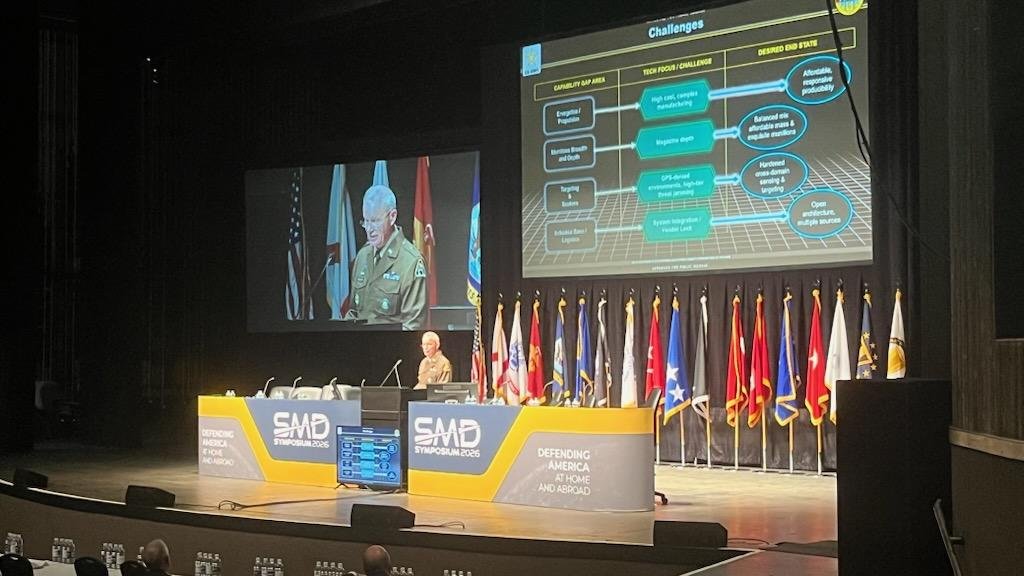
Lt. Gen. John Rafferty, commanding general of the U.S. Army Space and Missile Defense Command, delivered the first major military update of SMD after Huntsville Mayor Tommy Battle welcomed attendees to the Von Braun Center.
Rafferty was followed by U.S. Space Command and international space panels before Gen. Michael Guetlein, direct reporting program manager for Golden Dome for America, took the stage Tuesday afternoon.
Rafferty: Huntsville a ‘strategic advantage’
Rafferty began with Huntsville itself, pointing to the concentration of military, government and private industry surrounding Redstone Arsenal.
“I don’t think the visionaries of Operation Paperclip who brought those captured scientists here to North Alabama could have imagined the type of ecosystem that they would create,” Rafferty said. “It really is a national treasure and definitely a strategic advantage.”
Operation Paperclip was a U.S. government program that brought more than 1,600 German scientists, engineers and technicians to the United States after World War II to advance American military and space research. Among them was Wernher von Braun, who came to Huntsville with his rocket team and helped establish the foundation for the city’s emergence as a center of U.S. space and missile technology.
Rafferty’s focus quickly turned to a rapidly evolving threat environment.
“The threat and the pace of change is remarkable,” Rafferty said.
Among Rafferty’s updates and priorities:
- SMDC has added the 32nd Army Air and Missile Defense Command and 263rd Army Air and Missile Defense Command to its forces and established Joint Task Force-Gold to help deliver Golden Dome for America.
- Forces under the 32nd have spent the past 14 months in what Rafferty called “the largest air missile defense fight in U.S. history.”
- He said 125 ballistic missiles were successfully engaged during the “12-day war” and more than 1,200 ballistic, cruise missile and unmanned aircraft threats have been neutralized during Operation Epic Fury.
- SMDC is pushing for a broader missile defeat strategy that goes beyond interceptors to include electronic warfare, directed energy, data and integrated command and control.
- Rafferty said the command will seek a closer relationship with the defense industry, telling attendees, “Today I pledge that SMDC is going to be a great teammate.”
Rafferty also challenged the industry to accept more development risk at home to reduce the risk faced by service members in combat.
“If we really mean it that we’ll never forget, then we’ll be willing to take risks,” Rafferty said. “Not operational risk. We’ll be willing to take schedule risk, investment risk, technical risk, take the operational risk and minimize it and take the risk back here.”
Golden Dome moves from concept to construction
By Tuesday afternoon, attention shifted to Golden Dome, where Guetlein said the homeland missile defense initiative has moved rapidly from presidential directive to contracts, testing and construction.
“Golden Dome did not exist a year ago,” Guetlein said. “It was a concept that came out of the EO, but it didn’t exist.”
Now, Guetlein said, “We are digging dirt around the homeland.”
Among the updates:
- Golden Dome has its first operational site and is working toward delivering capabilities in summer 2028.
- Guetlein said the program has completed two “phenomenally successful” tests.
- Of $22.5 billion available, he said 90% is obligated and 95% committed.
- Radars, launchers, space-based interceptors, hypersonic ballistic tracking and a space data network are under contract.
- Guetlein continues to estimate the architecture at approximately $185 billion.
- He described Golden Dome as a “systems of systems, multi domain layered architecture” designed to counter conventional and nuclear threats approaching the homeland from air, land, sea and space.
But Guetlein also identified a major hurdle ahead: fiscal 2027 funding.
Golden Dome’s initial funding came through reconciliation rather than the regular defense budget, meaning a continuing resolution would not provide the program the same funding bridge available to established programs.
“I will tell you that if they don’t figure it out, there is no Golden Dome because there is no funding,” Guetlein said.
Still, he expressed confidence Congress will find a way forward.
“I believe we’re going to figure this budget problem out,” Guetlein said. “I think the nation’s going to come together in a very bipartisan manner and figure out what needs to be done.”
Guetlein also made clear to the hundreds of companies filling the Von Braun Center have a role to play. He said he has already met one-on-one with more than 500 companies about Golden Dome challenges and potential solutions.
He announced the of an online Ecosystem Hub where companies can submit ideas and capabilities for consideration. Guetlein said submissions are vetted for security and potential foreign influence, with teams also available to help companies protect their intellectual property and networks.
Golden Dome has also created a digital environment designed to bring program data together and allow industry, academia and government partners to work with that data and develop potential solutions.
“We are open for business, we are testing, we are delivering capabilities, we are digging dirt,” Guetlein said.
SMD continues Wednesday, with U.S. Space Command Commander Gen. Stephen Whiting scheduled to deliver a USSPACECOM update at 8:45 a.m. as the command begins its transition to Redstone Arsenal.
Got a tip for OTR? Send your tip to [email protected] with related photo/video, your name, phone number, and e-mail address.