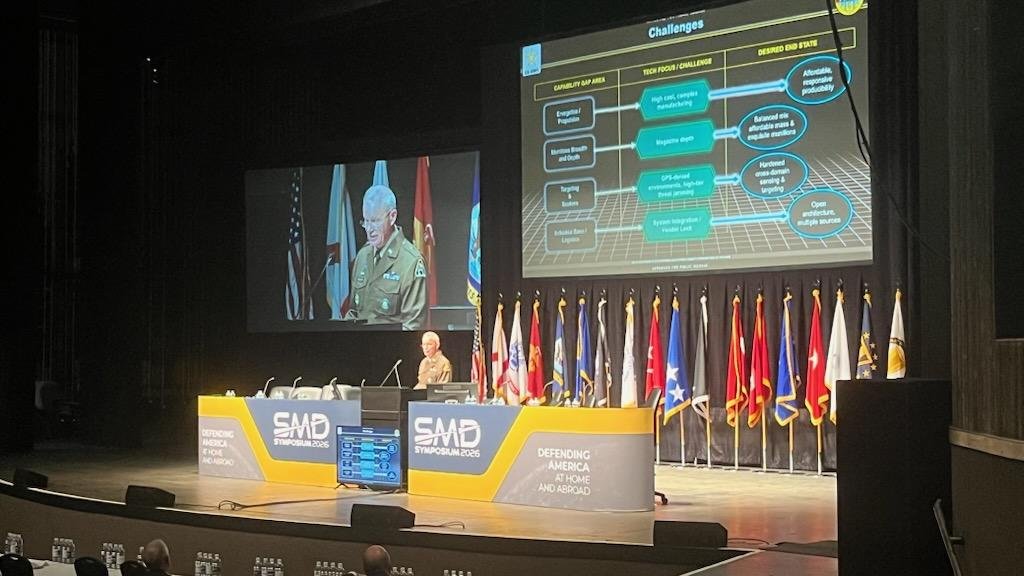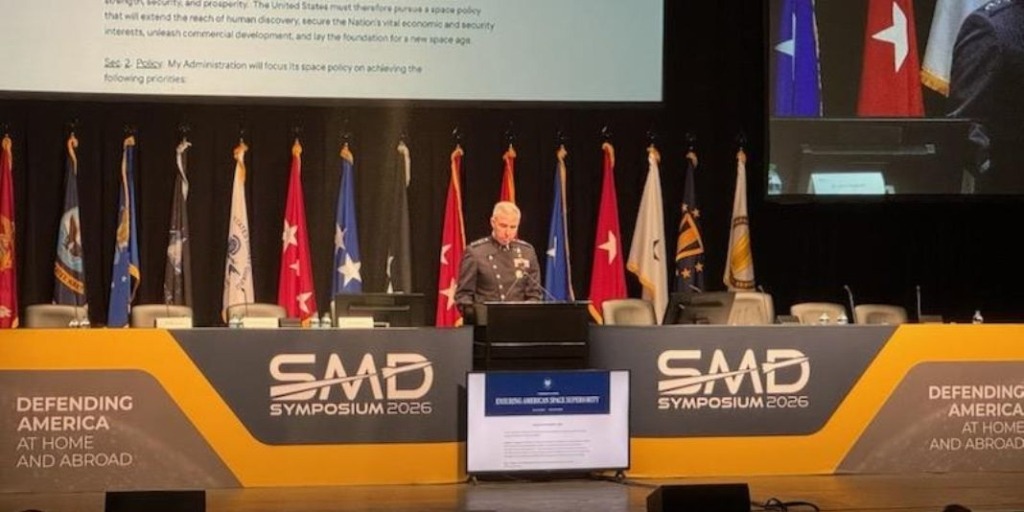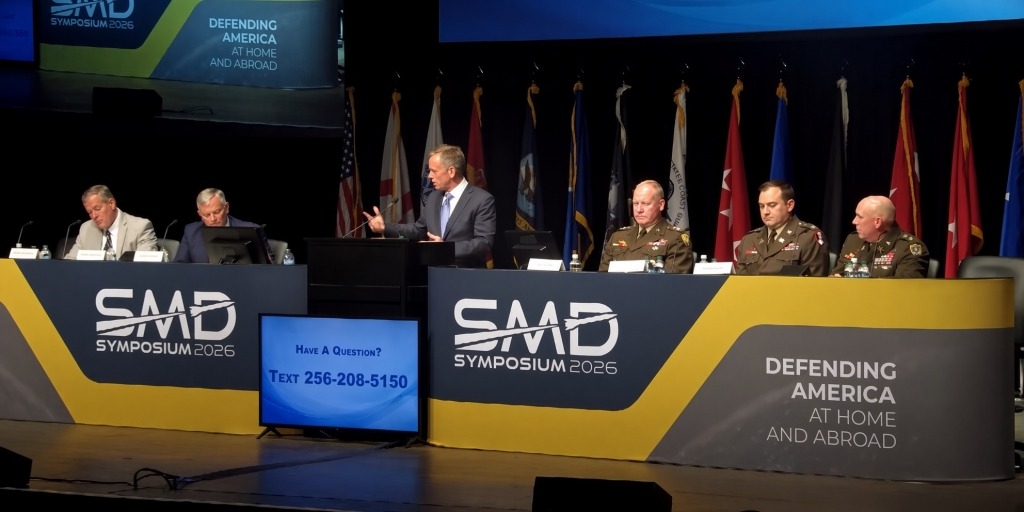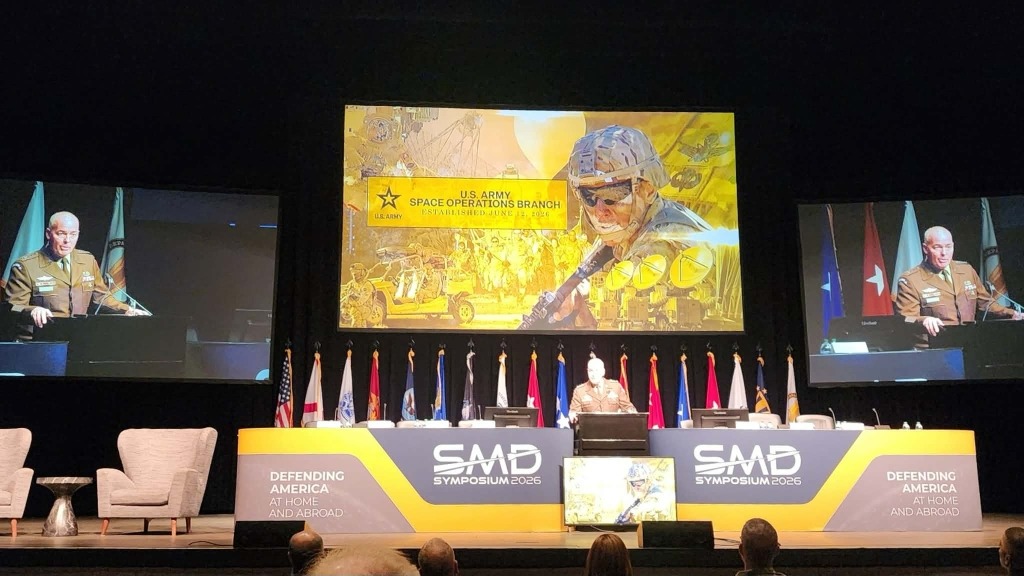
As military leaders at this week’s Space and Missile Defense Symposium repeatedly call on industry to deliver technology faster, Huntsville-based Aurex says it has already built its business around doing just that.
The roughly 300-person aerospace and defense company is using its Huntsville headquarters and new 45,000-square-foot Mission Center to design, build, test and deploy technologies ranging from missile defense hardware to artificial intelligence and mission-critical communications.
And Aurex CEO Warren Kohm says the goal is fairly straightforward: do it faster and for less.
“They want it faster, they want it quicker, they want it cheaper, they want high TRL,” Kohm told 256 Today.
Kohm said Aurex is targeting development timelines that can be dramatically shorter than those traditionally associated with major defense programs.
“When the government says to a larger prime, ‘Hey, I want something,’ it may be three years before they get it,” Kohm said. “And we can do something like that in 9, 12 months.”
Aurex Director of Modeling and Simulation Brian LeCompte said part of that speed comes from putting different disciplines under the same roof rather than spreading development among teams across the country.
“We put all those different skill sets where people are sitting next to each other, working rapidly day by day to develop things,” LeCompte said.
From an idea to something that flies
One example is SPOCBOT, a compact flight-test device LeCompte said is deployed from a missile in space and travels alongside it, using infrared and visible cameras to observe objects released during the test.
The device transmits information back through the launch vehicle to the ground in real time, providing data that can be used to validate simulations.
Aurex is preparing for the second flight test of SPOCBOT in January and recently received a contract for a third, according to LeCompte.
The company is also developing lower-cost flight hardware and countermeasures designed to allow the government to conduct more frequent and less expensive missile defense testing.
“We’ve heard that message loud and clear,” LeCompte said of the government’s emphasis on speed.
That approach extends beyond hardware.
LeCompte’s team is using Unreal Engine for physics-based missile simulations and artificial intelligence to model how missiles and interceptors behave against one another. AI agents can also be trained to make battle management decisions, including which interceptor to launch and when.
“We can kind of do scrimmages with real missile simulations and real interceptors,” LeCompte said.
‘You gotta be where it’s at’
Aurex’s ability to move quickly is one reason the company has invested heavily in Huntsville.
Its Mission Center, delivered last year, includes about 45,000 square feet designed for engineering, manufacturing and mission development. Kohm said Aurex now has three buildings in Huntsville and has made the city its headquarters.
“When I was hired to be part of this company, it was, ‘Hey, go down and make the headquarters Huntsville and be in the Rocket City and make this happen,’” Kohm said. “This is the place to do it.”
Asked why Huntsville matters to the company’s strategy, Kohm reached for a NASCAR analogy.
“If you want to build a car and you want to be competitive in NASCAR, you’ve got to be in Charlotte,” he said. “You’ve got to be where the people are, the technology, the suppliers, the testing, the track, everything.”
For missile defense and aerospace, he said, that place is Huntsville.
“If you’re going to be serious, you’ve got to be in the game,” Kohm said. “At the end of the day, it’s about putting yourself at the pointy end of the spear. It’s here in Huntsville.”
Kohm said that means more than simply opening an office.
“It’s where the engineers are, it’s where the doctorates are, it’s where the really smart people are,” he said. “But you also then actually have to put your assets to play, which means build a building, get it focused, get them organized.”
‘We’ve actually played in the Super Bowl’
Despite its size, Kohm said Aurex has another advantage when competing for defense work: flight heritage.
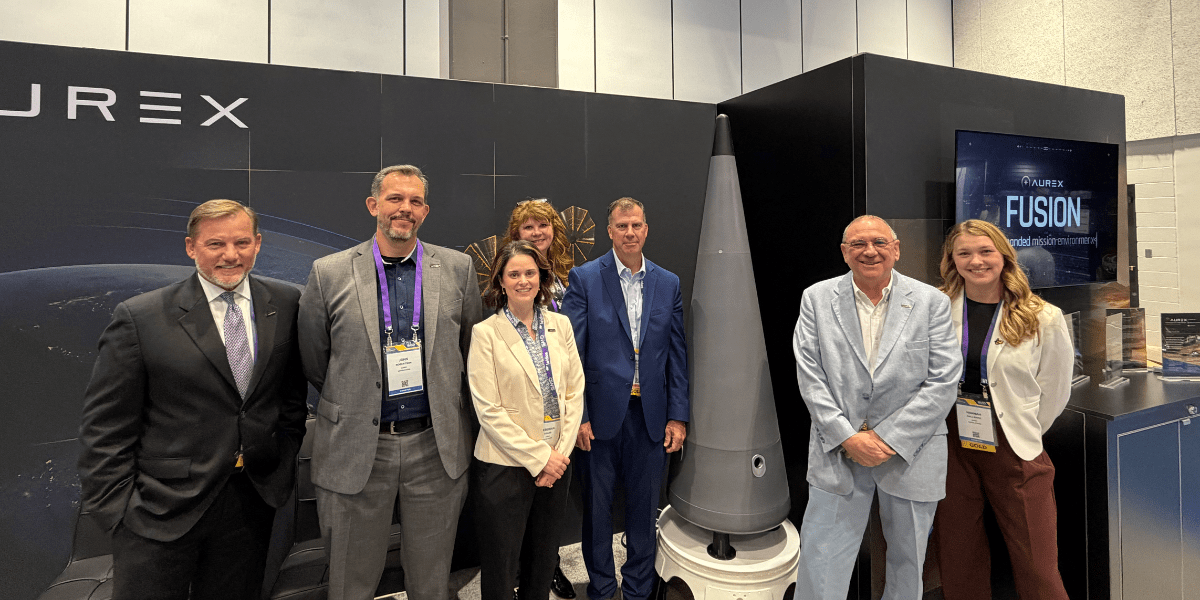
The company’s existing DICES secure communications technology is used for mission-critical communications, including by U.S. Strategic Command and NASA. Aurex is also developing DICES Fusion, the next-generation concept the company unveiled at SMD this week.
Kohm compared having technology actually used on high-stakes missions to the difference between watching championship football and playing in it.
“We can say we’ve been in the Super Bowl,” Kohm said. “We’ve actually performed.”
That experience, combined with the ability to take a project through multiple stages under one organization, is part of Aurex’s pitch to government customers.
“I like you guys because I don’t have to go to five or six different companies to integrate all this technology into one package,” Kohm said, describing feedback from Missile Defense Agency customers. “I can go to one stop, one location, one person.”
For a company of about 300 employees, Kohm said, that breadth is significant.
“Not everybody knows what we do, and not everybody understands what we’ve done,” he said.
That’s part of the reason Aurex came to SMD.
Kohm said conversations at the company’s booth this week have already progressed beyond simply introducing the company and its technology to potential customers.
“We are closing deals today,” Kohm said.
And for Aurex, he said, being able to have those conversations in the same city where the company is building the technology is precisely the point.
“You can’t do it in Northern Virginia, you can’t do it in Atlanta, Georgia,” Kohm said. “You gotta be where it’s at.”
Got a tip for OTR? Send your tip to [email protected] with related photo/video, your name, phone number, and e-mail address.