Google announced Monday it will invest $1.5 billion to expand its Jackson County data center campus over the next two years, marking one of the largest economic development investments in Northeast Alabama history.
The expansion, which will take place through 2027, builds on Google’s presence at its Bridgeport campus, located on the site of the former Tennessee Valley Authority Widows Creek coal plant. Company officials said the project will add to the hundreds of full-time jobs already supported by the facility while generating additional economic activity throughout the region.
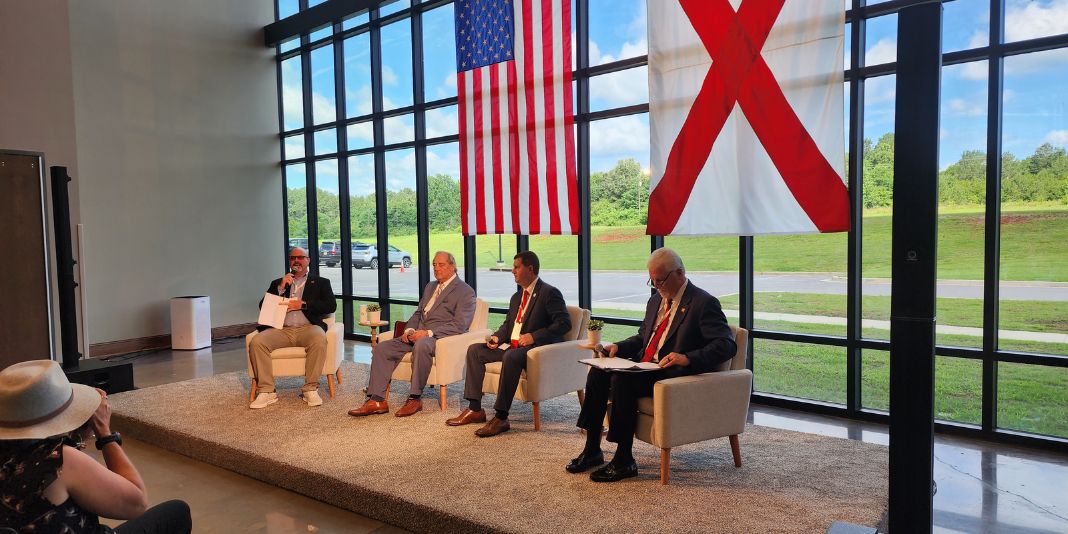
“This is probably one of the largest announcements that have been made in Jackson County,” said Alabama House Speaker Nathaniel Ledbetter. “It’s generational change.”
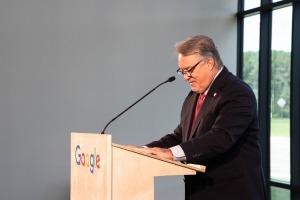
Thomas Gamble, Google’s Jackson County site lead, said the company’s investment reflects a long-term commitment to the region.
“Google’s going to commit $1.5 billion to expanding the Google Jackson County site in Bridgeport,” Gamble said. “As we grow the site, it’s going to add to the already hundreds of full-time jobs on site and bring even more benefits to our community.”
Gamble emphasized that Google’s approach centers on what he called “sustainable growth.”
“One of our points, as we always do, is we pay our way,” Gamble said. “We’re making sure we’re not putting rates down to the actual ratepayers and increasing them.”
Alongside the expansion, Google announced a $2 million Energy Impact Fund that will be administered through a partnership with the Tennessee Valley Authority and the Community Action Agency of Northeast Alabama. The fund will support weatherization and energy-efficiency improvements for schools and income-qualified households, primarily in Jackson County.
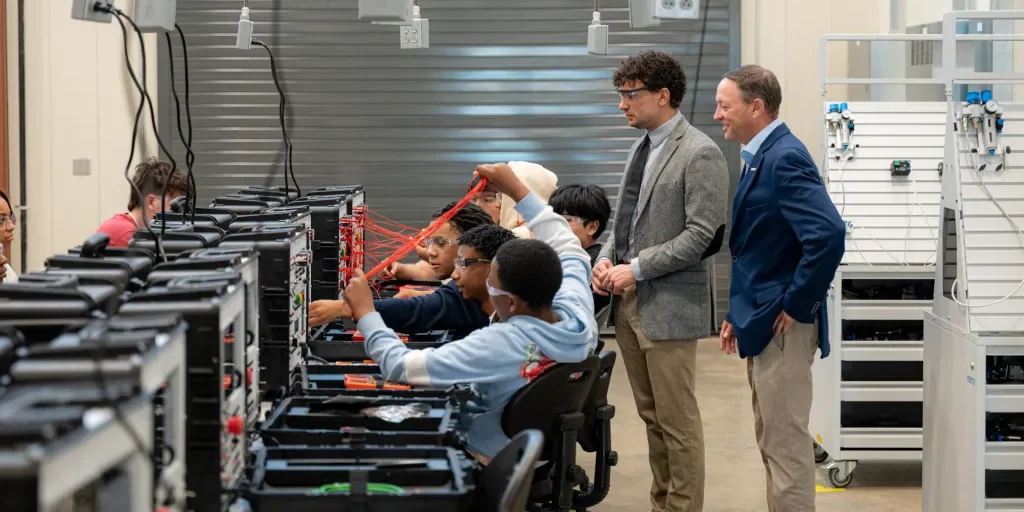
The company also announced a $550,000 commitment to provide STEM education kits for students in grades four through eight across the Jackson County School District over the next five years.
Ledbetter said those investments could create opportunities for generations of students.
“For these kids to have first-hand experience because of Google, that’s what’s going to be driving our country,” he said. “AI and technology are growing so fast, and they’re putting their money where their mouth is.”
The STEM initiative builds on Google’s existing education partnerships in Northeast Alabama, including support for robotics competitions, career academies and workforce development programs.
“Strong partnerships between industry and local communities are the foundation of regional prosperity,” said State Senate Majority Leader Steve Livingston. “From funding STEM education initiatives to supporting critical energy affordability programs, Google has consistently demonstrated a deep dedication to Jackson County. This new expansion will undoubtedly generate lasting, positive impacts for local families and businesses alike.”
Energy and resource use
As data center development continues to attract scrutiny nationwide over power and water consumption, Google officials highlighted the company’s operational transparency and resource planning efforts.
According to Cathie Vick, Google’s market development and advocacy lead, Google is the only major data center developer that publicly reports its resource usage.
Vick said Google conducts extensive assessments of power, water and infrastructure availability before selecting a site and works with utilities and local governments to ensure capacity is available for both the company and future community growth.
“If it will constrain capacity, we will not build at that site,” Vick said.
Google reports that its Jackson County campus operates with a trailing 12-month Power Usage Effectiveness, or PUE, of 1.10. PUE measures how efficiently a data center uses electricity, with lower numbers indicating less energy devoted to cooling and other overhead functions. Google’s most recently published quarterly figure for the site was 1.09, compared to a global industry average of 1.56.
The company says its large-scale data centers use approximately 84% less overhead energy than the industry average.
Google also noted it has contracted for more than 300 megawatts of new generation capacity across the Tennessee Valley region. That includes a partnership with Kairos Power and Tennessee Valley Authority to develop up to 50 megawatts of advanced nuclear power serving Google facilities in Alabama and Tennessee.
The company further participates in demand-response programs, reducing electricity use during peak demand periods to help maintain grid reliability.
Livingston said initiatives tied to energy efficiency and affordability help ensure local residents benefit alongside economic growth.
“We help our citizens to be able to insulate their homes, winterize or summerize their homes,” Livingston said. “It’ll change the environment for our folks here locally that are able to participate in those programs.”
Google officials also pointed to a commitment under the White House’s Ratepayer Protection Pledge, under which the company pays for 100% of the electricity it uses, as well as infrastructure costs directly associated with its operations.
The company has also emphasized responsible water stewardship as part of its long-term sustainability strategy. Google recently announced a commitment to replenish more water than it consumes across its operations.
In Jackson County, Google partnered with The Nature Conservancy to support restoration efforts in the Paint Rock River Watershed, a biodiverse area affected by erosion and sediment runoff. The project stabilized three priority erosion sites through revegetation and slope restoration efforts, reducing soil loss while improving water quality and aquatic habitats throughout the watershed.
Growing footprint
Google first announced plans for the Jackson County campus in 2018 and began operations in 2019. Since then, the facility has become one of the company’s key data center locations in the Southeast.
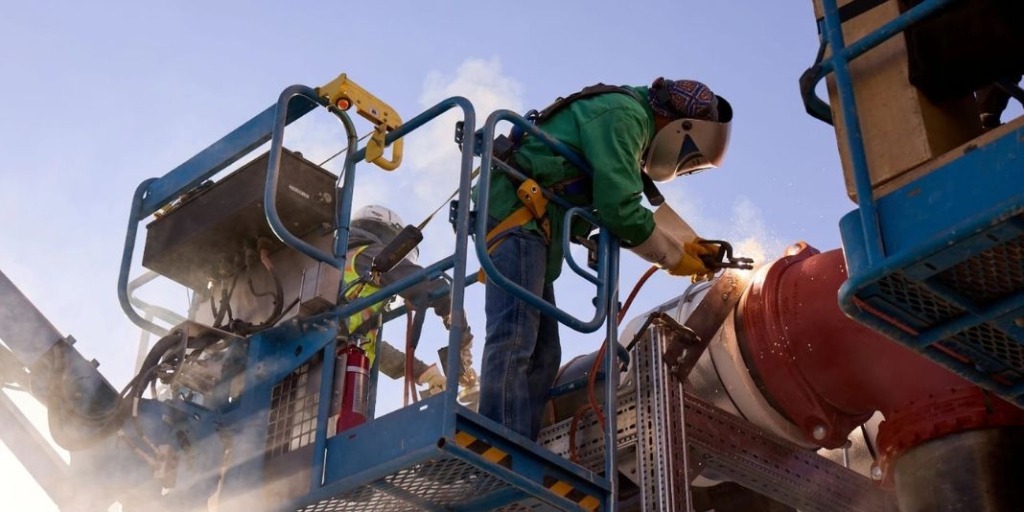
The company said the expansion will continue to generate business for local contractors, hotels, restaurants and service providers. More than 1,000 contract workers are expected to support construction activity during expansion phases.
Google also noted that it has contributed more than $28 million in philanthropic giving to Alabama nonprofits since 2009 and that employees have volunteered more than 6,000 hours with organizations across the state since 2016.
“When we’re looking for investments in Alabama, we’re looking for partners, not someone with just a handout,” Ledbetter said. “Google fits that bill.”