The nation’s longest state constitution could get a little longer on Tuesday.
Alabama voters face four statewide amendments and 32 local proposals, with most of the local measures focused on property tax relief for seniors.
Here’s your cheat sheet for the Nov. 3 election.
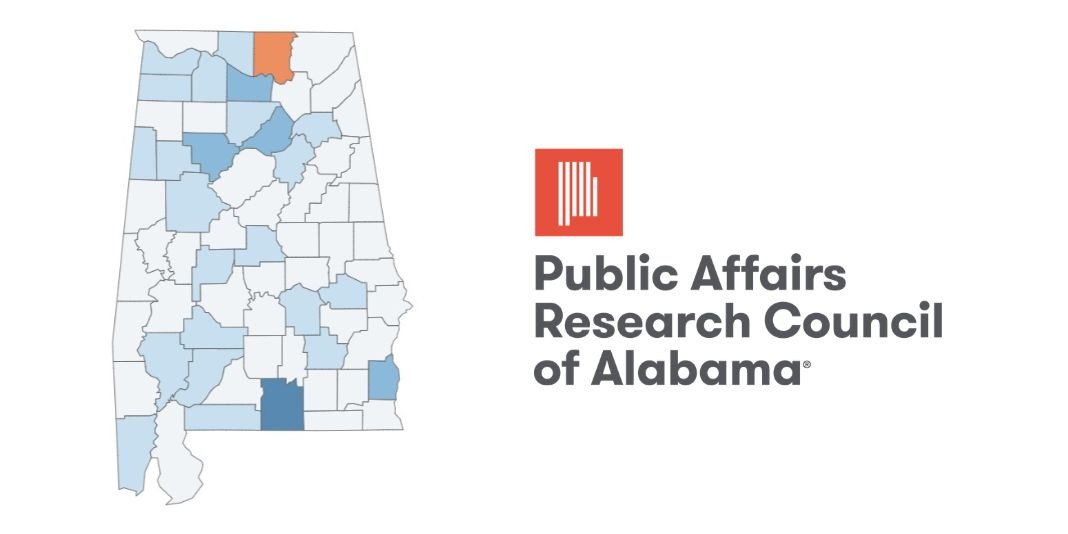
The Public Affairs Research Council of Alabama (PARCA), a nonprofit, nonpartisan organization that researches state and local government policy, has done the heavy lifting with its analysis of the proposed amendments.
For the full details, check out PARCA’s full analysis and click around on their handy map.
Four amendments every Alabama voter will see
Amendment 1: Lieutenant governor vacancies, salaries and travel
Would require an election to fill a lieutenant governor vacancy occurring in the first two years of a term, allow the Legislature to set pay for the lieutenant governor and legislative officers by joint resolution without the governor’s veto, and shift approval of senators’ travel expenses from the lieutenant governor to a Senate officer.
Amendment 2: Merging county school systems
Would create a voluntary process for neighboring county school systems to consolidate, including an impact study and a possible public vote if enough residents object. It would not automatically merge any schools.
Amendment 3: Pledge of Allegiance and student prayer
Would require public schools to conduct the Pledge of Allegiance at the beginning of each school day and adopt policies allowing student-initiated, student-led prayer. Students could opt out of either activity. Both are already addressed under state law, but the amendment would add the requirements to the Alabama Constitution.
Amendment 4: National anthem in schools
Would require public K-12 schools to play or perform the first stanza of “The Star-Spangled Banner” at least once a week during school hours. Students would not be required to sing or participate.
North Alabama’s local amendments
There are 32 additional local amendments statewide, with most of them addressing property tax freezes for qualifying homeowners 65 and older. Here’s what’s on the ballot in several North Alabama counties.
Colbert County: Senior property tax freeze
- Would allow qualifying homeowners 65 and older to freeze their home’s assessed value for property tax purposes. The home must have been their primary residence for at least five years.
Franklin County: Senior property tax freeze
- Would allow qualifying homeowners 65 and older to freeze their home’s assessed value for property tax purposes after living there as their primary residence for at least five years.
Lawrence County: Senior property tax freeze
- Would give qualifying homeowners 65 and older the option to freeze their home’s assessed value for property taxes, subject to the five-year primary residence requirement.
Limestone County: Senior property tax freeze
- Would allow qualifying homeowners 65 and older to freeze their home’s assessed value for property taxes after meeting the five-year primary residence requirement.
Madison County: Private sewer utility regulation
- Would bring certain privately owned sewer systems using public road rights-of-way under Alabama Public Service Commission oversight, including regulation of customer rates and fees. The proposal includes provisions allowing local governments with qualifying rate agreements to opt out of PSC regulation.
Morgan County: Two local amendments
- Senior property tax freeze: Would allow qualifying homeowners 65 and older to freeze their home’s assessed value for property taxes after meeting the five-year primary residence requirement.
- Probate judge qualifications and authority: Would require the county’s probate judge to be a licensed Alabama attorney and allow the judge to exercise certain powers currently held by circuit courts in cases filed in probate court.
Cullman County: Senior property tax freeze
- Would allow qualifying homeowners 65 and older to freeze their home’s assessed value for property tax purposes after living in the home as their primary residence for at least five years.
One last thing before you vote
A “yes” vote approves the proposed constitutional change. A “no” vote leaves the existing rules in place.
Whether voters approve any of the 36 proposed amendments or not, Alabama’s Constitution will remain the longest in the nation. According to the Public Affairs Research Council of Alabama, even after its 2022 reorganization, it’s roughly four times the length of Texas’ constitution, the next longest.
About two-thirds of the state’s constitution is devoted to local matters. Why? Alabama’s Constitution gives counties limited authority to govern themselves, meaning even some routine local decisions require approval through a constitutional amendment. The state’s 2022 constitutional reorganization left that system largely unchanged.
Got a tip for OTR? Send your tip to [email protected] with related photo/video, your name, phone number, and e-mail address.