NASA is moving forward with billions of dollars in contracts and new missions to establish a permanent presence on the Moon, with Huntsville’s Marshall Space Flight Center and several companies with local operations positioned to support the effort.
Related: NASA names Stephen Cash director of Marshall Space Flight Center
The agency announced the awards Saturday during the MAX POWER aerospace expo and air show at Kennedy Space Center in Florida, outlining plans for commercial lunar deliveries, a nuclear-powered rover, transportation systems and infrastructure to support its Moon Base at the lunar South Pole.
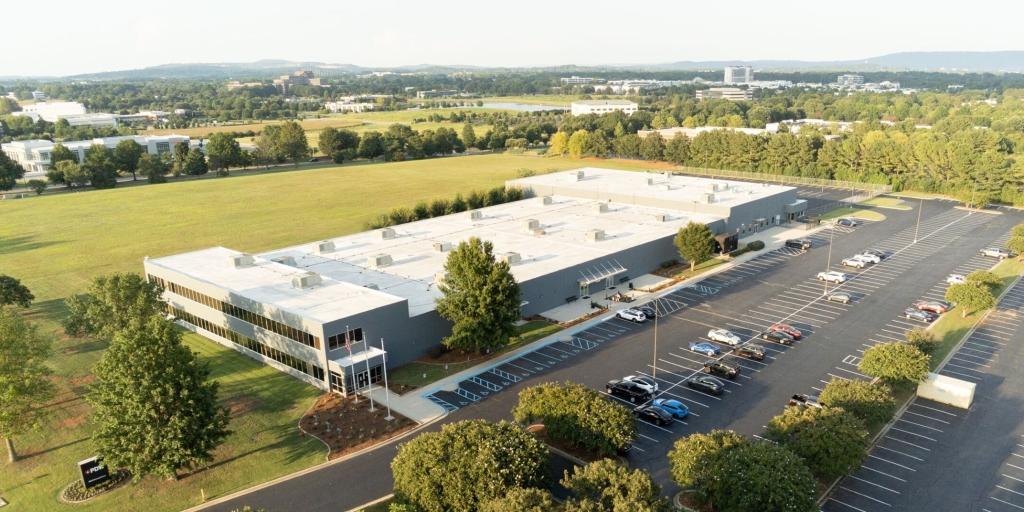
Among the projects is a new power and communications system that engineers at Marshall Space Flight Center will assemble and test before its components are delivered to the Moon.
The announcements also include opportunities for Blue Origin, Lockheed Martin Space and Northrop Grumman Space Systems, all of which maintain significant operations in Huntsville.
NASA did not specify where the companies will perform work associated with the new awards.
“We are building the Moon Base mission by mission,” said NASA Administrator Jared Isaacman. “Today’s announcements expand nearly every part of that campaign, using the playbook that carried NASA through its greatest eras: fly often, learn, apply those lessons, and get more better and more capable with every mission.”
“When our astronauts return to the Moon, they will arrive with the first elements of the Moon Base already waiting for them on the surface.”
Huntsville to support lunar power and communications
One of the clearest local connections involves NASA’s Mini-Communications and Solar Tower, known as miniCAST.
The system will combine solar power, energy storage and wireless power-transfer technology to support future operations on the lunar surface.
NASA awarded Honeybee Robotics, a Blue Origin company, work involving energy storage, Redwire for power generation and Yank Technologies for wireless power transfer.
Engineers at Marshall Space Flight Center in Huntsville will assemble and test the systems before they are delivered to the Moon.
NASA expects work to begin within months, initially focusing on individual components rather than a fully integrated system.
A separate solicitation for integrated power systems is expected in early 2027.
The technology is intended to help establish the power and communications infrastructure needed for astronauts, equipment and robotic missions operating near the lunar South Pole.
Eight companies selected for $10 billion lunar delivery program
NASA also selected eight companies to compete for future cargo delivery missions under the second phase of its Commercial Lunar Payload Services initiative, known as CLPS 2.
The companies are Blue Origin, Firefly Aerospace, Intuitive Machines, ispace US, Lockheed Martin Space, Northrop Grumman Space Systems, SpaceX and Voyager Technologies.
The 10-year, multiple-award contract has a combined maximum value of $10 billion.
The companies will compete to provide services for transporting scientific instruments, technology demonstrations and infrastructure to the lunar surface.
Selection makes the companies eligible to compete for future missions but does not guarantee each company a specific amount of work.
NASA also increased the ceiling of its existing CLPS contract from $2.6 billion to $4.2 billion to support initial Moon Base objectives.
The original contract will remain in place through November 2028, with an additional five years available to complete previously awarded deliveries.
Nuclear-powered rover targeted for 2028
NASA is also advancing development of a six-wheeled, nuclear-powered lunar rover called PROMISE, short for Polar Rover for Observation, Mapping, and In-Situ Exploration.
The rover will explore the Moon’s South Pole, including permanently shadowed regions believed to contain water ice.
Equipped with a drill, cameras, spectrometers and temperature and radiation sensors, PROMISE will study the lunar surface and subsurface to help NASA identify potential resources and future landing sites.
NASA’s Jet Propulsion Laboratory in California will manage the mission and build the rover using spare components and engineering test models from the Curiosity and Perseverance Mars rover programs.
The agency is targeting a late 2028 launch and an 18-month mission.
Blue Origin received a $94 million base contract, with a potential $140 million option based on performance, to deliver the rover to the lunar South Pole using its Mark 1 lander.
Blue Origin manufactures rocket engines in Huntsville, although NASA did not identify the location of work under the rover delivery award.
$1.3 billion in transportation missions
NASA awarded six additional task orders worth approximately $1.3 billion combined to Arrow Science and Technology, Blue Origin and Impulse Space.
The awards fall under NASA’s Venture-Class Acquisition of Dedicated and Rideshare launch services contract.
The missions will demonstrate technologies for moving cargo between Earth and the Moon, including orbital transfer vehicles that can transport equipment and spacecraft before lunar landers make the final delivery to the surface.
Some missions will also send robotic drones to scout the lunar South Pole before astronauts arrive.
NASA’s MoonFall drones are designed to explore terrain beyond the reach of traditional rovers, helping identify hazards and gather information for future human missions.
Other demonstrations will test navigation, communications and spacecraft operations in the region between Earth and the Moon.
The missions will use launch vehicles including Blue Origin’s New Glenn, Relativity Space’s Terran R and SpaceX’s Falcon 9.
NASA also selected SpaceX for a separate demonstration to deploy communications satellites into cislunar space aboard Starship in 2028.
The effort will help inform future communications networks connecting astronauts, mission controllers and lunar infrastructure.
Building toward a permanent lunar presence
The new awards are part of NASA’s broader effort to establish sustained operations at the Moon’s South Pole rather than relying solely on individual exploration missions.
“In the eight months since Ignition, we’ve made incredible strides in accomplishing the near impossible: establishing a permanent outpost on the lunar surface,” said Carlos García-Galán, manager of NASA’s Moon Base Program.
“We’ve consolidated numerous efforts into a streamlined program, evolving our human exploration architecture into an iterative and sustained campaign for Moon Base technology development and implementation.”
NASA also plans to seek additional commercial proposals for technologies and information needed to address remaining challenges in Moon Base development.
The agency said the work will support future Artemis missions, long-term lunar exploration and preparations for eventual human missions to Mars.
For Huntsville, the latest announcements add to Marshall Space Flight Center’s role in lunar exploration and create new opportunities for aerospace companies with operations across North Alabama, although the distribution of work among their facilities has not been announced.
More information is available at NASA’s Moon Base website.
Got a tip for OTR? Send your tip to [email protected] with related photo/video, your name, phone number, and e-mail address.