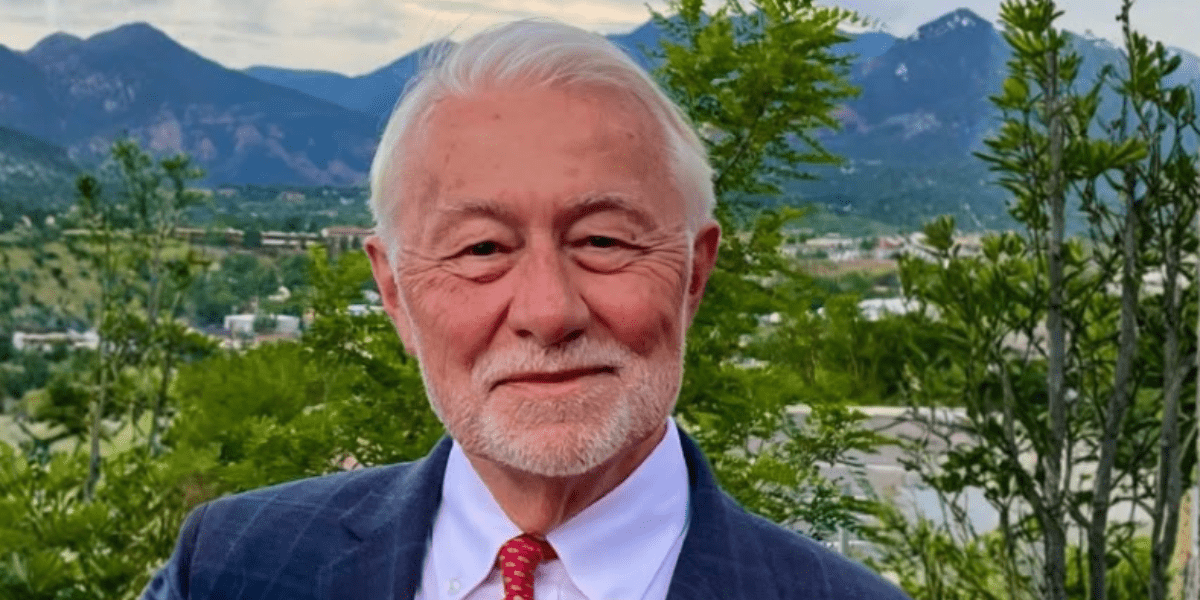
Ralph Petroff has spent decades making sure Huntsville’s space story is told the way it deserves to be.
Rocket City Space Fest is where that mission comes to life.
As the inaugural Rocket City Space Fest lifts off Thursday evening at the U.S. Space & Rocket Center, Petroff hopes the nine-day celebration will begin changing the way the world thinks about America’s journey to the Moon and the city that made it possible.
“For my entire business career, it’s bugged me that when I say I’m from Huntsville, Alabama, people go, ‘Oh… where’s that?’ instead of saying, ‘Oh wow, you’re the people who sent humans to the Moon,’” Petroff said.
“When people think about Apollo, they think about Cape Canaveral and Houston. But here in Huntsville, we gently remind people of something the rest of the world too often forgets: the Saturn V rocket that carried humanity to the Moon was designed and built right here.”
His message is simple.
“Houston had Mission Control,” Petroff said. “Huntsville did the hardest part. It built the ride.”
A mission years in the making
Petroff, a recently retired entrepreneur whose career included building multiple technology companies and pioneering innovations in wireless communications and autonomous robotics, said retirement finally gave him the opportunity to pursue something he’d thought about for years.
“When you’re a retired person, you don’t work on the things you have to work on,” he said. “You work on the things you want to work on.”
One of those passions became Rocket City Space Fest.
He believes Huntsville has long been the “Rodney Dangerfield” of America’s space program.
“We don’t get no respect,” he joked.
He attributes much of that to television.
“Cape Canaveral launched the rockets. They got about 20% of the airtime. Houston tracked them and got about 75%. If you came to Huntsville, you’d see a bunch of engineers with pocket protectors over drafting tables.”
Yet those engineers solved what Petroff calls the single hardest challenge of the Apollo program: building the Saturn V.
“The hardest part of getting to the Moon wasn’t flying there,” he said. “It was building a rocket with three million moving parts that could go from zero to 25,000 miles an hour in about 10 minutes, never fail, and do it with only 128K of memory.”
“They did it ahead of schedule and under budget.”
More than rockets
While celebrating Apollo is central to the festival, Petroff said there’s another story he wants people to understand and it isn’t about engineering.
It’s about reconciliation.
He compares Huntsville’s post-World War II history to an unwritten sequel to Saving Private Ryan.
“Five years after Americans and Germans were trying to kill each other, those same former enemies were working together in Huntsville to accomplish something magnificent for all humanity,” Petroff said.
“They put aside their differences and said, ‘Let’s build something extraordinary.’”
That collaboration transformed Huntsville from a town of roughly 12,000 residents into one of America’s leading technology centers.
“They wanted to create a community that celebrated science, the arts, the symphony, the opera, botanical gardens. Their vision was remarkable,” Petroff said.
“Former enemies worked together. If they could do that, why can’t the rest of America? Put aside your differences and work together.”
From refugee to Rocket City
Petroff’s own story mirrors the international roots of Huntsville’s space program.
His parents were European refugees displaced after World War II. His father, an engineer with degrees in civil, mechanical, electrical engineering and naval architecture, could not initially immigrate to the United States because post-war immigration restrictions.
“My parents were European war refugees, from Poland, my mother and Bulgaria, my father,” he said. “My father was a gifted engineer with engineering degrees in civil, mechanical, electrical and naval architecture.”
Petroff was born in Canada before the family moved to Saigon, he said then known as the “Paris of the Orient.”
Everything changed after Sputnik launched in 1957.
The United States began recruiting highly educated engineers through what became the precursor to today’s H-1B visa program.
“And they said, well, even if you are somebody from Bulgaria, if you’ve got a briefcase full of advanced engineering degrees, we want you. And so he got one of the very first of those kinds of visas and we made it here late 1959.”
His father accepted a position in Florida before earning what Petroff called “the big promotion” to Huntsville.
“Everybody wanted to come to Huntsville because that’s where the action was,” Petroff said.
The family arrived in the summer of 1963.
Despite national headlines surrounding Alabama during the Civil Rights Movement, Petroff said they quickly fell in love with Huntsville.
“We got here thinking, ‘We’re going to Alabama,’” he recalled. “But we were so impressed with Huntsville. Like so many people, we got here and said, ‘This is a nice place,’ and we’ve been here ever since.”
Petroff later graduated with distinction from Stanford University and spent decades launching technology companies, including ADS Environmental, Time Domain and Marathon Robotics, whose autonomous ground robots were eventually deployed by the U.S. military.
“I’ve been doing moonshots ever since. Not because they are easy, but because they are hard,” Petroff said, invoking President John F. Kennedy’s famous 1962 challenge to the nation.
Building a new tradition
The idea for Rocket City Space Fest grew after Petroff delivered a Rotary Club presentation more than a year ago about the need to better celebrate Huntsville’s Apollo legacy.
The response convinced him the idea had broader appeal.
As others joined the effort, including Huntsville Music Officer Matt Mandrella, the concept evolved from a single Apollo Day celebration into a citywide festival.
“A good idea becomes a great idea when more people get involved,” Petroff said.
Organizers hope the annual event eventually becomes a nationally recognized destination festival, drawing comparisons to Austin’s South by Southwest.
“This is about reclaiming our rightful place,” Petroff said. “Apollo stands among the greatest achievements of America’s first 250 years, and it began in the Rocket City.”
Festival schedule
Rocket City Space Fest continues through July 25 with events across Huntsville:
- July 16 – Lift-Off Day: Opening celebration at the U.S. Space & Rocket Center Biergarten featuring German food, local beer, live music beneath the Saturn V rocket, vintage launch footage and an appearance by NASA astronaut Dottie Metcalf-Lindenburger.
- July 17 – Cocktails and Cosmos: An evening celebrating space exploration at the INTUITIVE Planetarium.
- July 18 – Space Night: A space-themed Huntsville City FC match at Joe Davis Stadium with giveaways and halftime trivia.
- July 19 – Community Day: Community programming across North Alabama highlighting the region’s connection to the space program.
- July 20 – Apollo Day: The festival’s centerpiece featuring a lunar-landing-themed Concert in the Park at Big Spring Park and what will be Alabama’s largest drone show celebrating Lift-Off, the Moon landing, and Splashdown.
- July 23 – Biergarten Bookend: A return to the Space & Rocket Center honoring the Marshall Retirees Association with space authors and Apollo-to-Artemis discussions.
- July 24 – Splashdown Day: Downtown celebration recognizing Apollo veterans, themed activities and “Moonshot” cocktails made from Tang and vodka.
- July 25 – Bonus Bookend: Closing celebration with the Rocket City Trash Pandas and a fireworks show at Toyota Field.
For Petroff, though, success won’t ultimately be measured by attendance but by appreciating Huntsville’s singular role.
“All roads have led through Huntsville, Alabama, since the beginning of America’s space flight program,” he said. “That’s not changing.”
Got a tip for OTR? Send your tip to [email protected] with related photo/video, your name, phone number, and e-mail address.